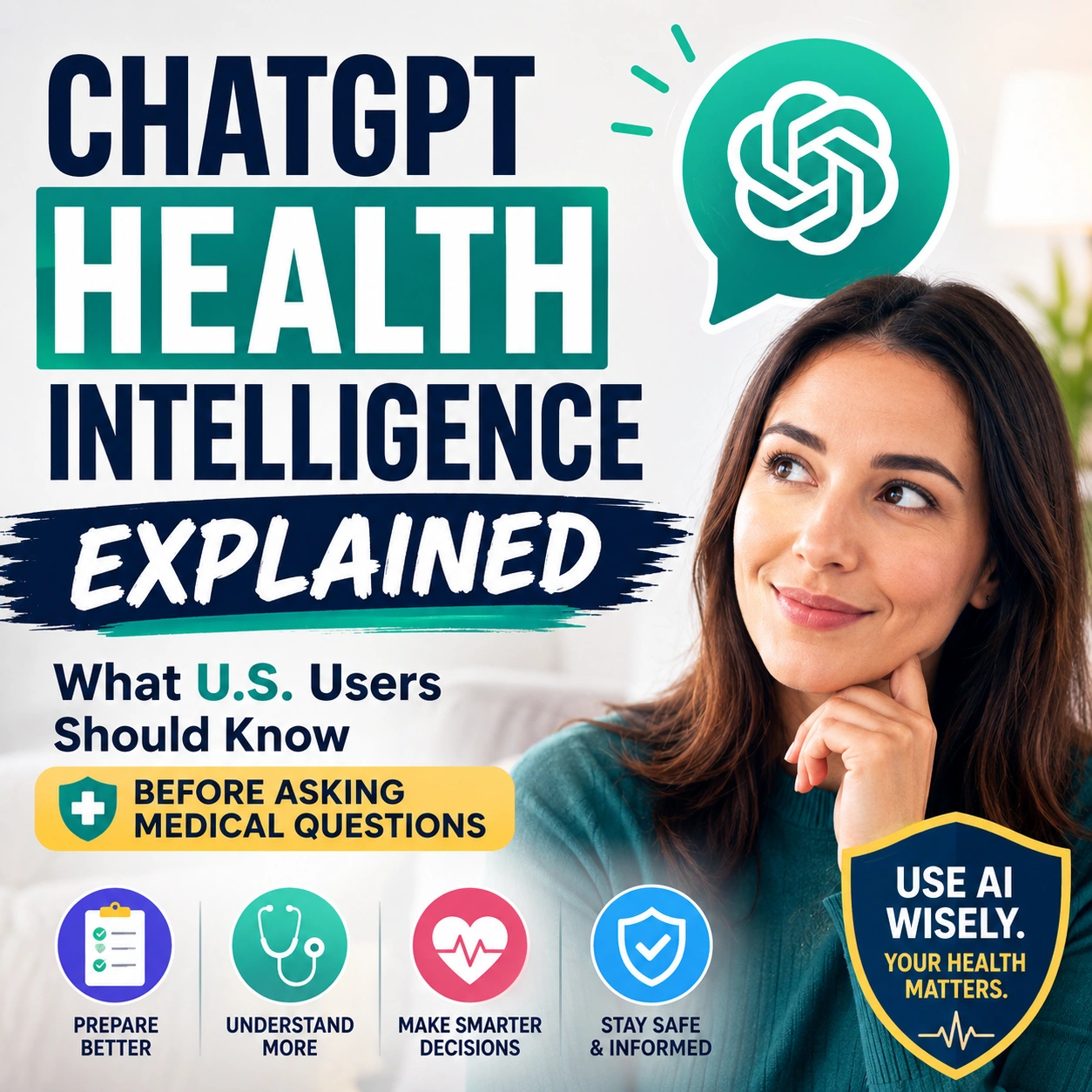
ChatGPT Health Intelligence Explained: What U.S. Users Should Know
ChatGPT health intelligence is becoming more useful for everyday health questions, from understanding lab-result language to preparing better questions before a doctor visit. But it also needs clear limits. A helpful AI explanation is not the same as a medical diagnosis, a treatment plan, or emergency care.
This guide explains what ChatGPT can help with, what it should not replace, how U.S. users can ask safer medical questions, and when to stop using AI and contact a real medical professional.
Quick Answer: Is ChatGPT Safe for Medical Questions?
ChatGPT can be useful for understanding health information, preparing for appointments, organizing symptoms, explaining medical terms in plain English, and creating better questions to ask a doctor. It should not be used as your only source for diagnosis, treatment, medication changes, emergency decisions, or urgent symptoms.
Ask ChatGPT to explain general health language in simple terms.
Use it to prepare a question list before a medical appointment.
Do not rely on ChatGPT alone for emergency symptoms or severe pain.
Do not change medication, dosage, or treatment based only on AI output.
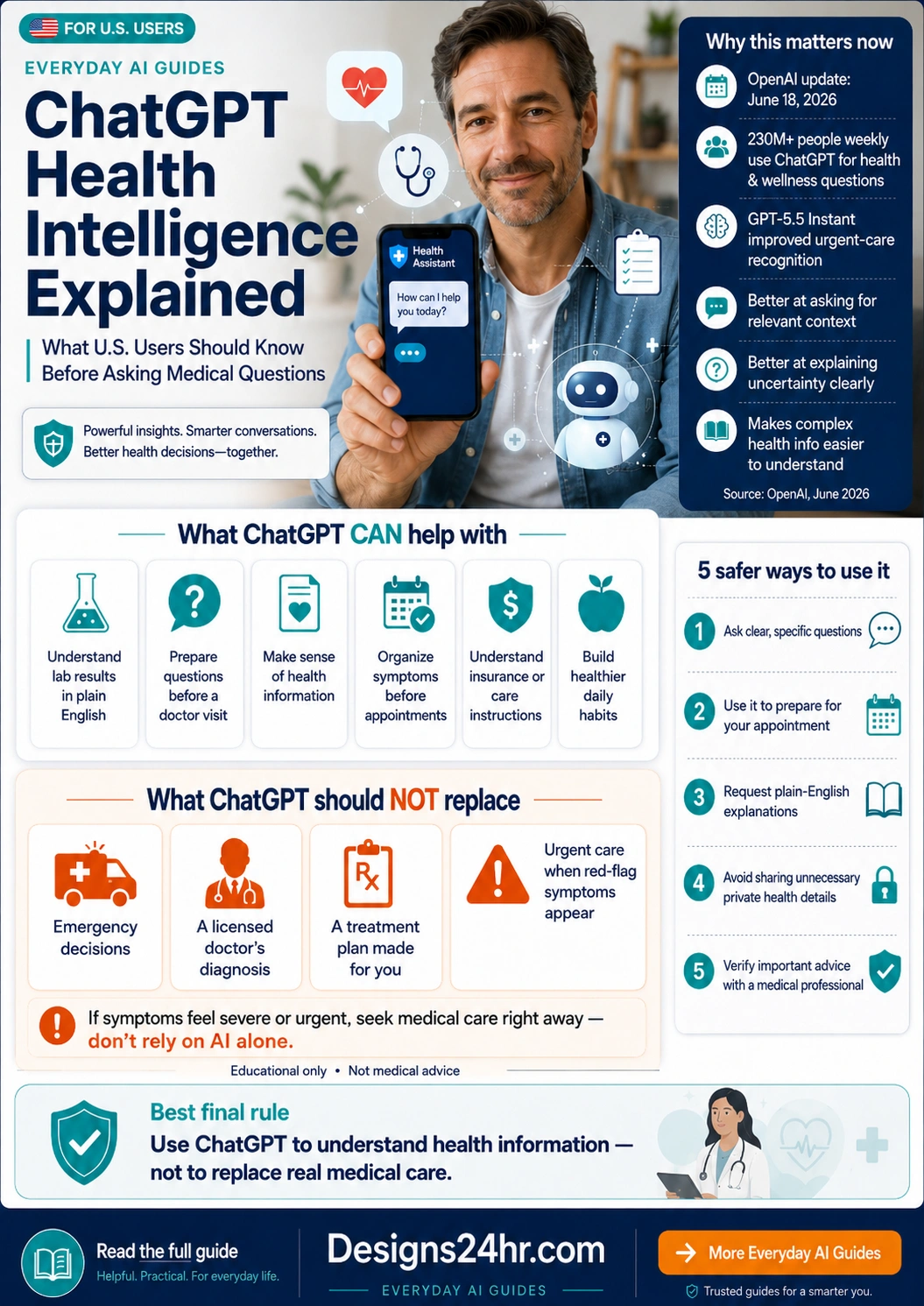
OpenAI’s June 2026 update says GPT-5.5 Instant improved health responses in areas such as recognizing when urgent care may be needed, asking for relevant context, explaining uncertainty, and making complex health information easier to understand. That is useful progress, but it does not remove the need for professional medical judgment.
The safest way to think about ChatGPT health intelligence is this: use it to understand, organize, and prepare. Do not use it to self-diagnose, self-treat, or delay urgent care.
What Is ChatGPT Health Intelligence?
ChatGPT health intelligence refers to ChatGPT’s ability to respond to health and wellness questions in a more helpful, careful, and understandable way. That can include explaining medical terms, helping users understand general health information, summarizing questions for a doctor, or helping someone prepare for a conversation with a healthcare provider.
It is not the same thing as being examined by a doctor. ChatGPT does not physically examine you, order tests, review your full medical history like your clinician can, or take legal responsibility for your care. Even when the answer sounds confident, it may still be incomplete, outdated, too general, or wrong for your situation.
What ChatGPT Can Help With
Used carefully, ChatGPT can make health information easier to understand. It can help you become a better-prepared patient, especially when medical language feels confusing.
Understand Lab Results in Plain English
You can ask ChatGPT to explain what common lab terms mean, what a high or low value usually refers to, and what questions to ask your doctor. This can reduce confusion before your follow-up visit.
Prepare Questions Before a Doctor Visit
ChatGPT can help you turn symptoms, concerns, or confusing notes into a clear appointment checklist so you do not forget important questions during a short visit.
Organize Symptoms Clearly
You can use ChatGPT to organize when symptoms started, what makes them better or worse, what you have tried, and what details may be useful to tell a clinician.
Translate Medical Jargon
If a discharge note, insurance message, prescription instruction, or portal message is hard to understand, ChatGPT can help rewrite it in simpler language.
Compare General Wellness Options
For non-urgent wellness questions, ChatGPT can help you compare general habits like sleep routines, hydration reminders, meal planning, or exercise questions to discuss with a professional.
Ask Better Follow-Up Questions
ChatGPT can help you move from “What does this mean?” to better questions like “What should I ask my doctor next?” or “What warning signs should I watch for?”
What ChatGPT Should Not Replace
ChatGPT health intelligence can support understanding, but there are clear situations where it should not be your decision-maker.
Emergency Decisions
If symptoms feel severe, sudden, or dangerous, do not wait for AI feedback. In the U.S., call 911 or seek emergency medical care right away.
A Doctor’s Diagnosis
AI can explain possibilities, but diagnosis requires clinical judgment, medical history, exam findings, tests, and professional responsibility.
Medication Changes
Do not start, stop, increase, reduce, or mix medications based only on ChatGPT. Ask your doctor or pharmacist first.
A Treatment Plan Made for You
AI may provide general information, but personalized treatment should come from licensed professionals who understand your full situation.
5 Safer Ways to Use ChatGPT for Health Questions
These habits help keep ChatGPT useful without making it the only voice in your health decisions.
Ask Clear, Specific Questions
Vague questions often produce vague answers. Instead of asking, “What is wrong with me?” ask for general education, possible questions to ask a clinician, and red flags to watch for.
Use It to Prepare, Not Decide
ChatGPT is strongest when it helps you prepare for real care. Ask it to organize your notes, simplify instructions, and create a doctor appointment checklist.
Request Plain-English Explanations
Ask ChatGPT to explain medical words at a normal reading level. This can help you understand what your doctor, lab report, or insurance document is saying.
Protect Private Health Details
Avoid sharing unnecessary personal details such as full name, address, Social Security number, medical record numbers, insurance ID, exact birthdate, or other sensitive identifiers.
Verify Important Advice With a Professional
For anything involving symptoms, medication, test results, pregnancy, children, chronic illness, mental health, surgery, or urgent care, confirm the next step with a qualified medical professional.
Good Prompts for ChatGPT Health Questions
The way you ask matters. These prompts keep the conversation focused on education, preparation, and safety instead of asking ChatGPT to act like your doctor.
Explain these lab-result terms in plain English. Do not diagnose me. Tell me what questions I should ask my doctor about these results. Help me prepare for a doctor appointment. Organize these symptoms into a short summary, then create a list of questions I can ask my clinician. Rewrite this medical instruction in simple language. Keep the meaning the same and list anything I should confirm with my healthcare provider. Give me general educational information only. What warning signs would mean I should seek urgent medical care instead of waiting? What parts of your answer are uncertain, what information is missing, and what should I verify with a medical professional? ChatGPT Medical Advice Limits: What Users Should Remember
The main risk with AI health answers is not only that they can be wrong. It is that they can sound confident while missing important context. A real clinician may consider your age, medications, allergies, pregnancy status, medical history, family history, physical exam, local care options, lab trends, and risk factors.
ChatGPT may not have all of that context. Even when you provide details, it still cannot examine you or replace a medical professional who is responsible for your care. That is why the safest approach is to treat ChatGPT as a health information helper, not a medical authority.
How to Use ChatGPT for Lab Results Explained
Many people use AI because lab reports are full of abbreviations, ranges, and technical terms. ChatGPT can help explain what the terms usually mean, but it should not decide whether your specific result is dangerous or harmless.
When asking about lab results, include the name of the test, the result, the reference range, and the unit if you are comfortable sharing it. Do not include your name, address, medical record number, insurance information, or other identifiers. Then ask ChatGPT to help you understand the language and prepare questions for your doctor.
| Use Case | Helpful ChatGPT Use | What to Verify With a Professional |
|---|---|---|
| Lab results | Explain terms, reference ranges, and common reasons a value may be high or low. | What your exact result means for your health, history, symptoms, and treatment plan. |
| Symptoms | Organize symptom notes and suggest questions to ask a doctor. | Diagnosis, urgency, testing, medication, and whether you need same-day care. |
| Medication information | Explain common medication terms and help you create questions for a pharmacist. | Dosage, interactions, side effects, stopping medication, or mixing medications. |
| Insurance language | Simplify terms like deductible, copay, prior authorization, and coverage notes. | Your actual benefits, billing responsibilities, and coverage decision. |
| Doctor visit prep | Create a short summary and question list to bring to the appointment. | Medical decisions, next steps, referrals, and treatment recommendations. |
Privacy Tips Before Sharing Health Information With AI
Health information is sensitive. Before pasting anything into ChatGPT or any AI health assistant, remove details that are not needed for a general explanation.
- Remove your full name, address, phone number, email, Social Security number, and insurance ID.
- Remove medical record numbers, appointment IDs, claim numbers, and pharmacy account numbers.
- Avoid uploading full documents if a short copied section is enough.
- Use general age ranges when possible, such as “adult in my 40s,” unless exact age is medically necessary.
- Do not share someone else’s private health information without permission.
- Check the platform’s privacy settings and data controls before using it for sensitive topics.
For U.S. users, it is also important to understand that not every wellness app, chatbot, or AI tool is regulated the same way as a hospital or doctor’s office. Privacy rules can vary depending on the tool, the setting, and the type of data involved.
Is ChatGPT the Same as an FDA-Authorized AI Medical Device?
No. General-purpose AI chatbots and FDA-authorized AI-enabled medical devices are not the same thing. The FDA maintains a list of AI-enabled medical devices that are authorized for marketing in the United States, which is different from using a general AI chatbot for educational health questions.
This distinction matters because a general chatbot may help explain information, but that does not mean it has been authorized to diagnose, monitor, or treat a condition. If a product claims to diagnose or treat you, look closely at who made it, what it is approved or authorized to do, and whether a licensed professional is involved.
Before You Trust an AI Health Answer, Ask These 6 Questions
- Is this answer general education, or is it trying to make a decision for me?
- Does this involve urgent symptoms, severe pain, medication, pregnancy, children, or chronic illness?
- Could waiting make the situation worse?
- Did the answer explain uncertainty clearly?
- Can I verify this with a doctor, pharmacist, official medical source, or patient portal?
- Did I remove private details before sharing health information with AI?
Helpful Designs24hr Tools for Safer Understanding
If you are using AI to understand confusing language, keep the goal simple: clarity, not self-treatment. These free Designs24hr tools can help you simplify, check, and organize information before you talk to a professional.
Use AI Wisely Before Your Next Health Conversation
These tools can help simplify confusing text, explain complex wording, and remind you to verify important information before relying on it.
Best Takeaway for U.S. Users
ChatGPT health intelligence can be a helpful support tool when you use it for understanding, preparation, and better communication. It can help make lab results, appointment notes, insurance language, and medical terms easier to understand.
But health decisions are different from everyday questions. If the issue is urgent, personal, complex, risky, or treatment-related, bring the information to a licensed medical professional. A good AI answer should help you ask better questions, not make you skip real care.
Final Rule
Use ChatGPT to understand health information, prepare for appointments, and ask smarter questions. Do not use ChatGPT as your only source for diagnosis, treatment, medication decisions, emergency symptoms, or personalized medical care.
Sources and Further Reading
- OpenAI: Improving health intelligence in ChatGPT
- FDA: Artificial Intelligence-Enabled Medical Devices
- AMA: What doctors want patients to know about using AI for health tips
- FTC: Health Privacy
- MedlinePlus: Health Topics
FAQs About ChatGPT Health Intelligence
What is ChatGPT health intelligence?
ChatGPT health intelligence refers to ChatGPT’s improved ability to respond to health and wellness questions with clearer explanations, better context questions, more uncertainty awareness, and safer guidance about when to seek care. It is still not a replacement for licensed medical care.
Can ChatGPT diagnose medical problems?
No. ChatGPT can explain general information and help you prepare questions, but diagnosis should come from a qualified medical professional who can review your history, symptoms, exam findings, and test results.
Can I use ChatGPT to understand lab results?
Yes, you can use ChatGPT to explain lab-result terms in plain English and prepare questions for your doctor. You should not use it alone to decide whether a result is serious or what treatment you need.
Is ChatGPT safe for medication questions?
ChatGPT can explain general medication terms, but you should not start, stop, mix, or change medication based only on an AI response. Ask your doctor or pharmacist before making medication decisions.
What health information should I avoid sharing with ChatGPT?
Avoid sharing full names, addresses, Social Security numbers, insurance IDs, medical record numbers, claim numbers, and unnecessary private details. Share only what is needed for a general explanation.
When should I not use ChatGPT for health questions?
Do not rely on ChatGPT for emergency symptoms, severe pain, medication changes, treatment decisions, diagnosis, pregnancy complications, children’s urgent symptoms, suicidal thoughts, or anything that could require immediate medical care.
What is the safest way to use ChatGPT before a doctor visit?
The safest way is to ask ChatGPT to organize your symptoms, simplify confusing language, and create a question list for your clinician. Then bring those notes to your appointment and let a medical professional guide the decision.