An AI voice detector can help you examine a suspicious voicemail, phone recording or audio message for signs of synthetic speech. But a detector result cannot prove that a familiar-sounding voice is genuine.
Voice-cloning technology can imitate relatives, managers, public figures and other trusted people. Use this AI voice detector checklist to slow down, verify the sender independently, understand the limits of deepfake voice detectors and avoid acting on a convincing fake recording.
Quick answer: Do not trust a recording only because the voice sounds familiar or an AI audio detector labels it “human.” Contact the supposed sender through a phone number or account you already trust before sending money, sharing information or following urgent instructions.
What Is an AI Voice Detector?
An AI voice detector, also called a deepfake voice detector, AI audio detector or voice clone detector, analyzes a recording for patterns associated with synthetic speech.
Depending on the service, the result might appear as:
- Likely AI-generated.
- Likely human-generated.
- Uncertain or inconclusive.
- A probability or confidence percentage.
- A match with a specific voice-generation system.
Different tools may analyze pitch, timing, frequency patterns, vocal transitions, background consistency and other audio characteristics. However, they do not all detect the same generators, languages or types of recordings.
For example, one tool may be designed to identify audio produced by a particular voice platform, while another attempts to recognize a wider range of synthetic speech. A “human” result may therefore mean only that the tool did not detect the specific AI patterns it supports.
Can an AI Voice Detector Prove That Audio Is Real?
No. An AI voice detector result should be treated as one piece of evidence, not a certificate of authenticity.
Audio detection can become less reliable when the recording has been shortened, forwarded, compressed, played through a speaker, recorded again or mixed with background noise. Detection systems may also struggle with new voice-generation models they were not trained to recognize.
A large real-world benchmark of deepfake voice detectors found that detector performance declined significantly across varied generators and altered recordings. Separate research has also shown that transcoding, playback and background noise can reduce the reliability of synthetic-speech detection.
You can review the research behind these limitations in the VoiceWukong deepfake voice detection benchmark and the study Can DeepFake Speech Be Reliably Detected?.
Important distinction: “Likely human” does not mean “verified sender.” Even a real human recording can be taken out of context, edited, replayed or sent from a compromised account.
AI Voice Detector Checklist: 10 Checks Before Trusting a Recording
Use the following process whenever a voice message asks you to send money, reveal private information, open an account, visit a link or take an unusual action.
Pause Before Responding to Urgency
Scammers want you to react before you have time to check the story. An emotional or urgent message can make a familiar voice seem more convincing than it really is.
Do not immediately:
- Send money or cryptocurrency.
- Purchase gift cards.
- Share a password or verification code.
- Provide account, banking or identity information.
- Click a link contained in the message.
- Move the conversation to another app.
- Follow instructions to keep the situation secret.
Take a breath and separate the emotional claim from the action being requested. A real emergency can still be verified.
Preserve the Original Recording
Save the earliest and highest-quality version of the suspicious audio. Do not edit, trim, enhance or repeatedly convert it before completing your checks.
Preserve:
- The original voicemail or audio attachment.
- The sender’s phone number, username or email address.
- The complete conversation or message thread.
- The date and time received.
- Any payment instructions or account details.
- Screenshots of the sender’s profile and request.
Forwarding an audio file through messaging apps may compress it. Recording it from another speaker introduces additional sound changes. These changes can make later analysis more difficult.
Check the Sender and the Context
Review how the recording reached you before focusing on how the voice sounds.
Ask:
- Did it come from the person’s normal number or account?
- Is the person contacting you through a new platform?
- Does the request match the person’s usual behavior?
- Does the message contain details that can be independently checked?
- Is the sender refusing normal follow-up questions?
- Is there an unusual request for secrecy?
- Is the account new, incomplete or recently changed?
Caller ID, profile photos and display names can be copied or spoofed. Contact information that looks familiar is not proof that the real person sent the recording.
Contact the Person Through a Known Method
This is the most important check. End the suspicious call or leave the message unanswered, then contact the person independently.
Use:
- A phone number already saved in your contacts.
- An established email address.
- A previously verified messaging account.
- Another family member, colleague or trusted contact.
- An official company number found independently.
Do not use a callback number included only in the suspicious recording, message or email. The Federal Trade Commission advises people to contact the supposed family member through a number they already know rather than trusting the voice on the line.
Read the FTC’s official guidance on family-emergency and voice-cloning scams.
Ask a Private Verification Question
Ask something the real person can answer but a scammer is unlikely to find through public profiles, search results or recent social posts.
A useful verification question should not rely on:
- A birthday visible online.
- A pet’s name shared on social media.
- A school, workplace or hometown listed publicly.
- Information included in an obituary or public announcement.
- A fact that several acquaintances could know.
Families can also agree on a private emergency phrase. Store it somewhere safe, do not publish it online and replace it if anyone outside the trusted group learns it.
The private question is an additional check—not a replacement for calling through a known number.
Listen for Speech and Context Clues
Listen carefully with headphones if it is safe to do so, but remember that human listening cannot reliably identify every cloned voice.
Possible warning signs include:
- Word choices that do not match the person’s usual style.
- Emotion that feels disconnected from the situation.
- Unusual pauses, pacing or breathing.
- Repeated phrases or sentence patterns.
- Abrupt changes in volume or background sound.
- Unnatural pronunciation of names or locations.
- Missing environmental sounds that should be present.
- A refusal to answer unexpected questions.
These details are clues, not proof. High-quality synthetic voices may sound natural, while a genuine phone call can sound strange because of stress, poor reception or audio compression.
Test the Recording With More Than One Detector
When the recording is important enough to analyze, compare results from at least two suitable AI voice detector tools.
Do not assume that two tools are independent if they use the same underlying detection service. Review each tool’s documentation and supported use cases where possible.
Before uploading audio, consider whether it contains:
- Private family conversations.
- Customer or employee information.
- Medical, legal or financial details.
- Account numbers or passwords.
- Confidential workplace information.
- The voice of a child or vulnerable person.
Review the tool’s privacy policy, retention period and deletion options. The AI Agent Safety Checklist provides a broader framework for checking permissions, connected accounts and data handling before sharing information with an AI service.
Check What the Detector Actually Supports
A detector result is meaningful only when the recording falls within the tool’s supported conditions.
Check:
- Supported languages and accents.
- Minimum and maximum audio length.
- Accepted file formats.
- Maximum file size.
- Whether phone and voicemail recordings are supported.
- Whether the detector recognizes all synthetic voices or selected generators.
- Whether music or background noise affects the analysis.
- Whether the tool returns a calibrated probability or a simple label.
- Whether uploaded files are stored or used for training.
A result from an unsupported language, extremely short clip or incompatible format should not be treated as reliable.
Consider Compression and Recording Quality
Audio quality can significantly affect a deepfake voice detector.
Be especially cautious when the file has been:
- Forwarded through one or more messaging apps.
- Downloaded from social media.
- Recorded from a phone or computer speaker.
- Heavily compressed.
- Reduced to a very short clip.
- Mixed with music or loud background noise.
- Edited or enhanced.
- Converted between several file formats.
Use the original file whenever possible. If only a poor-quality copy is available, treat an uncertain or “human” result with additional caution.
Save Evidence and Report Suspected Fraud
If the recording appears connected to fraud, impersonation, extortion or account theft, save the evidence before blocking the sender.
Keep copies of:
- The original recording.
- Phone numbers, email addresses and usernames.
- Dates and timestamps.
- Payment requests and transaction details.
- Links, attachments and QR codes.
- Detector results and screenshots.
- Your independent verification attempts.
Suspected internet-enabled financial fraud can be reported to the FBI Internet Crime Complaint Center. Consumer scams can be reported through ReportFraud.ftc.gov. Unwanted calls and robocalls can also be reported through the FCC Consumer Complaints Center.
A familiar voice is not proof. Verify through a contact method you already trust.
How to Interpret an AI Voice Detector Result
Detector labels can appear definitive, but they should always be interpreted in context.
| Detector result | What it may mean | What to do next |
|---|---|---|
| Likely AI | The tool detected patterns associated with synthetic speech. | Do not act on the recording. Verify the sender independently and preserve the evidence. |
| Likely human | The tool did not identify the AI patterns it supports. | Continue independent verification. This result does not prove the identity of the speaker. |
| Uncertain | The tool did not have enough reliable evidence to classify the recording. | Try the original file, review tool limitations and compare another detector. |
| Conflicting results | Different tools recognized different patterns or support different generators. | Treat the recording as unverified and rely on direct contact with the supposed sender. |
| Unsupported file | The format, duration, language or quality falls outside the detector’s limits. | Use a compatible tool or the original file. Do not interpret a failed analysis as a human result. |
Never average percentages from different detectors. A 70% score from one service and a 40% score from another do not create a meaningful combined probability unless the tools use the same validated measurement system.
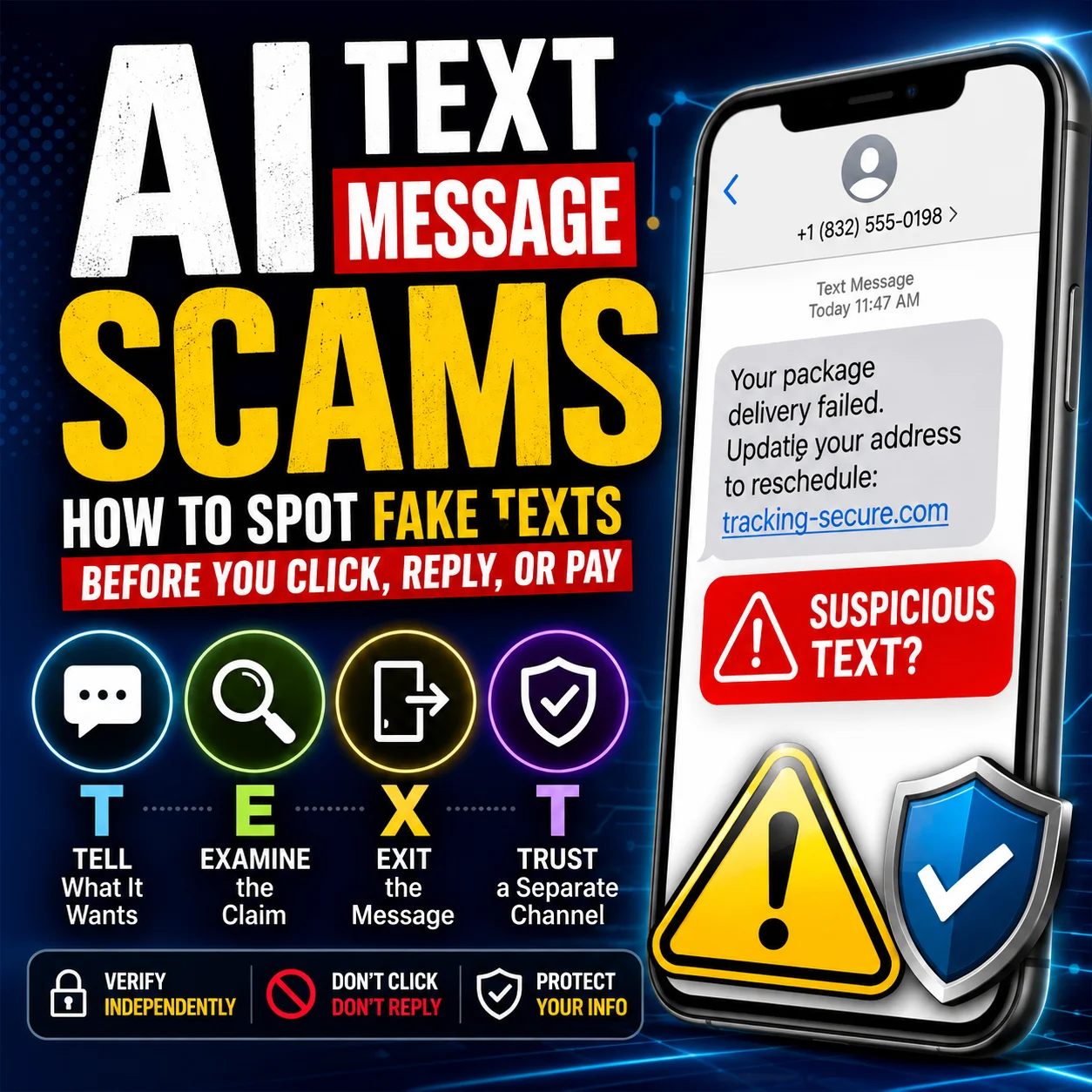
Warning Signs of a Voice-Cloning Scam
A cloned voice is often only one part of a larger impersonation strategy. The request and behavior surrounding the recording may reveal more than the sound itself.
Common warning signs include:
- A sudden emergency involving arrest, injury, travel or medical treatment.
- A demand to act immediately.
- A request to keep the situation secret.
- Instructions to avoid contacting another family member or manager.
- A request for gift cards, cryptocurrency, wire transfers or payment apps.
- A demand for passwords, login codes or financial details.
- Contact from a new number or unfamiliar account.
- An explanation for why the person cannot video call.
- Pressure to remain on the phone while completing a transaction.
- A link to an unfamiliar payment, messaging or account-login page.
- Refusal to answer a personal verification question.
- A story that changes when challenged.
The FBI has warned that criminals use AI-generated audio to imitate relatives, public figures and trusted contacts in attempts to obtain money or account access. Review the FBI’s guidance on generative AI and financial fraud.
What to Do If You Already Sent Money or Information
Act quickly. The appropriate recovery steps depend on what you shared and how you paid.
If You Sent Money
- Contact the bank, card issuer, payment app or transfer service immediately.
- Explain that the payment resulted from an impersonation scam.
- Ask whether the transaction can be stopped, reversed or disputed.
- Save the transaction number and all related messages.
- Report the incident to the FTC and, where appropriate, the FBI IC3.
If You Shared Account Information
- Change the exposed password immediately.
- Change any other account using the same password.
- Enable multifactor authentication.
- Review login history, recovery details and recent activity.
- Contact the affected company through its official website or app.
The FTC provides payment-specific recovery instructions in What to Do if You Were Scammed. When you need a replacement credential, use the Designs24hr Free Password Generator to create a strong, unique password.
If personal identity information was exposed, visit IdentityTheft.gov for a recovery plan.
Create a Family Voice-Scam Safety Plan
A simple family plan can reduce panic when an urgent call or recording arrives.
Agree that everyone will:
- Never send money based only on a voice message.
- Call back through a number already saved or independently verified.
- Use a private emergency question or family phrase.
- Contact another relative when the supposed caller cannot be reached.
- Ignore requests to keep an emergency secret.
- Pause before using gift cards, cryptocurrency or wire transfers.
- Report compromised social-media and messaging accounts quickly.
- Avoid posting unnecessary long, clean voice recordings publicly.
- Teach children and older relatives that voices can be cloned.
- Replace the private verification phrase if it becomes exposed.
You can use the Designs24hr What To Say? script generator to prepare calm callback wording, such as asking the caller to wait while you verify the situation through another contact.
If a suspicious recording arrives with a confusing written message, paste only the non-sensitive wording into Explain This For Me to identify the main request and pressure tactics. Remove names, passwords, account details and private information first.
Final AI Voice Verification Checklist
Before trusting or acting on a voice recording, confirm that you have:
- Paused before responding to urgency.
- Saved the original recording and sender details.
- Checked whether the request fits the person’s normal behavior.
- Contacted the person through a method you already trust.
- Asked a private verification question where appropriate.
- Reviewed speech, context and background clues.
- Compared more than one suitable AI voice detector.
- Checked each detector’s supported conditions and privacy policy.
- Considered compression, editing and recording quality.
- Saved evidence and reported suspected fraud.
Final Thoughts
An AI voice detector can help you investigate suspicious audio, but it should never be the only reason you trust a recording. Detector results can be affected by new voice models, file quality, language, compression and the way the audio was recorded.
The strongest verification step is still simple: stop, use a trusted contact method and confirm the request directly with the person or organization involved.
A familiar voice can create confidence. Independent verification creates safety.
For visual deepfakes and suspicious pictures, continue with the Designs24hr AI Image Verification Checklist.
Frequently Asked Questions
What is an AI voice detector?
An AI voice detector is a tool that analyzes a recording for patterns associated with synthetic speech, voice cloning or AI-generated audio. Results may be shown as a label, probability or confidence score.
Can an AI voice detector be wrong?
Yes. Results can be affected by unsupported voice generators, short clips, language, background noise, file compression, playback and re-recording. Treat the result as evidence rather than final proof.
How can I tell whether a voice recording is AI-generated?
Check the sender and context, contact the supposed speaker through a known method, ask a private verification question, review the audio for inconsistencies and compare results from more than one suitable detector.
Does a “human” detector result prove that a recording is real?
No. It may mean only that the detector did not recognize supported synthetic-audio patterns. It does not verify who created, edited or sent the recording.
Can scammers clone a voice from a short recording?
Voice-cloning systems can use audio collected from videos, social posts, voicemail greetings and other recordings. The FTC and FBI have warned that cloned voices may be used in family-emergency and impersonation scams.
What should I do if a family member calls asking for money?
End the call and contact the person through a phone number or account you already know. If you cannot reach them, contact another family member or trusted friend. Do not send money based only on the voice.
Should I use more than one deepfake voice detector?
Using more than one suitable detector may provide additional evidence because tools can support different generators, languages and audio conditions. Conflicting results mean the recording should remain unverified.
Is it safe to upload a private recording to an AI detector?
Review the service’s privacy policy, storage practices, deletion options and training-data terms first. Avoid uploading confidential, financial, medical, legal, workplace or child-related recordings when the service’s handling of the audio is unclear.
Where can I report an AI voice scam?
Depending on what happened, you can report internet-enabled financial fraud to the FBI Internet Crime Complaint Center, consumer scams to the FTC through ReportFraud.ftc.gov and unwanted calls or robocalls through the FCC Consumer Complaints Center.
Official Sources and Further Reading
- FBI IC3: Criminals Use Generative Artificial Intelligence to Facilitate Financial Fraud
- FBI IC3: AI-Generated Voice Messages Used in Impersonation Campaigns
- FTC: Scammers Use Fake Emergencies to Steal Your Money
- FTC: What to Do if You Were Scammed
- FCC Consumer Complaints Center
- VoiceWukong: Benchmarking Deepfake Voice Detection
This guide provides general digital-safety information and does not replace professional legal, financial, cybersecurity or law-enforcement advice. Detector capabilities, reporting procedures and government guidance can change. Review the latest official information before taking action.