Everyday AI Guides • AI for Small Business & Marketing
ChatGPT Ads Checklist for U.S. Small Businesses
Before you spend money advertising in AI answers, use this simple checklist to decide your goal, fix your landing page, track clicks, protect trust, and test ChatGPT ads carefully.
Best for
Local services, online shops, coaches, consultants, agencies, and lead-generation offers.
Reader goal
Understand what to prepare before testing ads in ChatGPT.
ChatGPT ads are becoming a new advertising option for businesses that want to reach people while they are researching, comparing, and making decisions inside an AI conversation. That sounds powerful, but it also means small businesses should not rush in without a plan.
If you run a local service business, e-commerce shop, coaching offer, agency, Etsy-style product brand, newsletter, or lead-generation website, this guide will help you decide whether ChatGPT ads are worth testing and what to check before you spend.
For more beginner-friendly business guides, visit Everyday AI Guides or browse the AI for Small Business & Marketing category.
Quick Answer: What Should Small Businesses Check Before Trying ChatGPT Ads?
Before advertising in ChatGPT, check your campaign goal, offer, landing page, tracking links, conversion measurement, budget, privacy expectations, and trust signals. A small business should test ChatGPT ads only when the click has somewhere useful to go and every campaign can be measured.
What Are ChatGPT Ads?
ChatGPT ads are sponsored placements that may appear in relevant ChatGPT conversations. According to OpenAI’s advertiser help page, a ChatGPT ad can include an advertiser name, favicon or logo, headline, description copy, landing page, and image asset.
The important part for advertisers is intent. People may use ChatGPT when they are trying to understand a problem, compare options, plan a purchase, research tools, or decide what to do next. That can create a very different advertising environment from a normal display banner or social feed ad.
The important part for users is trust. OpenAI says ads do not influence ChatGPT’s answers, are labeled as sponsored, and are visually separated from the organic answer. OpenAI also says advertisers do not get access to a person’s chats, chat history, memories, or personal details. You can review OpenAI’s own overview here: Testing ads in ChatGPT.
Why ChatGPT Ads Matter for U.S. Small Businesses
Small businesses already compete for attention on Google, Meta, TikTok, YouTube, email, marketplaces, and local search. ChatGPT ads may become another place where customers discover brands, products, services, and useful resources while asking detailed questions.
That does not mean every small business should jump in immediately. It means business owners should understand how this channel works now, because AI-powered discovery is becoming part of the customer journey.
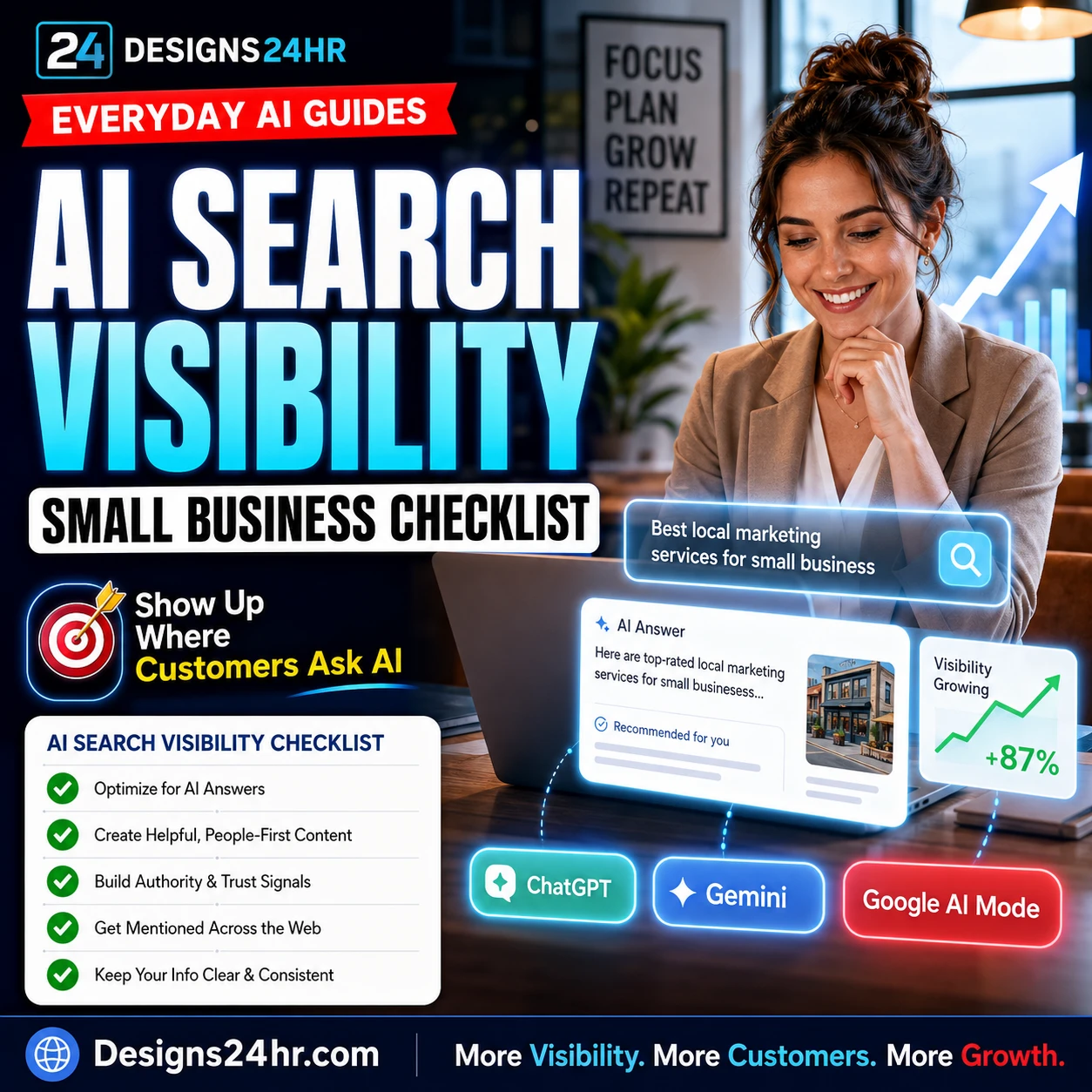
If your business is also trying to get discovered through AI search and AI referrals, read AI Referral Traffic Explained next. Paid ChatGPT ads and organic AI discovery are different, but both reward clear pages, useful answers, strong trust signals, and easy-to-understand offers.
AI intent can be specific
A user may describe a real problem, budget, location, or buying need in natural language.
Trust matters more
People may be relying on the answer to make a decision, so pushy or unclear ad copy can hurt credibility.
Measurement is early but useful
Advertisers can track key campaign metrics and use UTM parameters on landing page URLs.
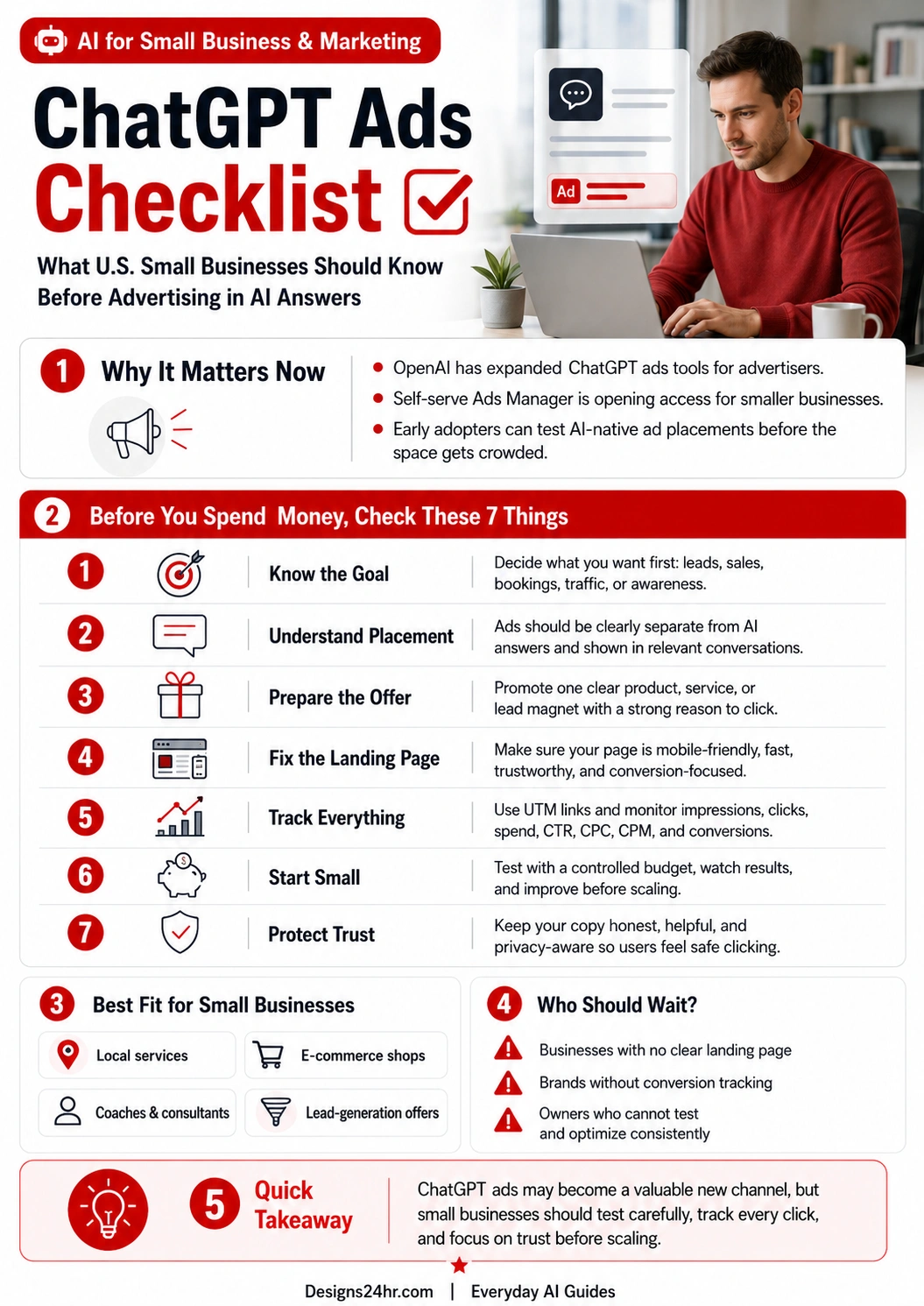
The 7-Point ChatGPT Ads Checklist
Use this checklist before launching any ChatGPT ads campaign. The goal is not to be perfect. The goal is to avoid wasting money on unclear offers, weak landing pages, missing tracking, or ad copy that does not match user intent.
1Know the goal before you spend
Do not start with “we should try ChatGPT ads.” Start with a business goal. Are you trying to get more leads, appointment bookings, product sales, newsletter signups, demo requests, local calls, or brand awareness?
A clear goal helps you choose the right landing page, write better ad copy, set a realistic budget, and judge whether the test worked.
2Understand where ads may appear
ChatGPT ads are not the same as traditional keyword search ads. OpenAI says ad selection considers relevance to the context and intent of the conversation, along with inputs such as landing page, ad title, ad copy, and context hints.
That means your page and ad need to explain the offer clearly. If your landing page is vague, the system and the user may both struggle to understand when your ad is relevant.
3Prepare one clear offer
A small business ad should usually promote one simple offer, not your entire company. Examples include a free consultation, a service estimate, a product collection, a beginner guide, a booking page, a downloadable checklist, or a limited product category.
The user should instantly understand what they get, who it is for, why it is useful, and what to do next.
4Fix the landing page first
Your landing page matters as much as the ad. Before sending paid traffic to any page, make sure it loads fast, looks good on mobile, explains the offer above the fold, includes trust signals, and has one clear call to action.
Use the free Title/Meta Previewer to check how your page title and meta description may appear in search results before you promote the page.
5Track every click
OpenAI’s advertiser help page says static UTM parameters can be added to landing page URLs and used in existing analytics tools. That matters because small businesses need to know which ads, pages, offers, and audiences are actually working.
Before launch, create campaign URLs with the free UTM Builder. At minimum, track source, medium, campaign name, and the offer or ad variation.
6Start small and measure the right numbers
Do not judge a new channel by clicks alone. OpenAI says Ads Manager Beta reporting includes impressions, clicks, spend, click-through rate, average CPC, average CPM, and conversions if conversion measurement is set up.
For a small business, the most important question is not “Did we get traffic?” It is “Did the traffic produce leads, bookings, purchases, signups, or useful actions at a cost we can afford?”
7Protect trust before scaling
Because ChatGPT is often used for decisions, trust is part of performance. Avoid exaggerated claims, fake urgency, unclear pricing, misleading promises, and landing pages that do not match the ad.
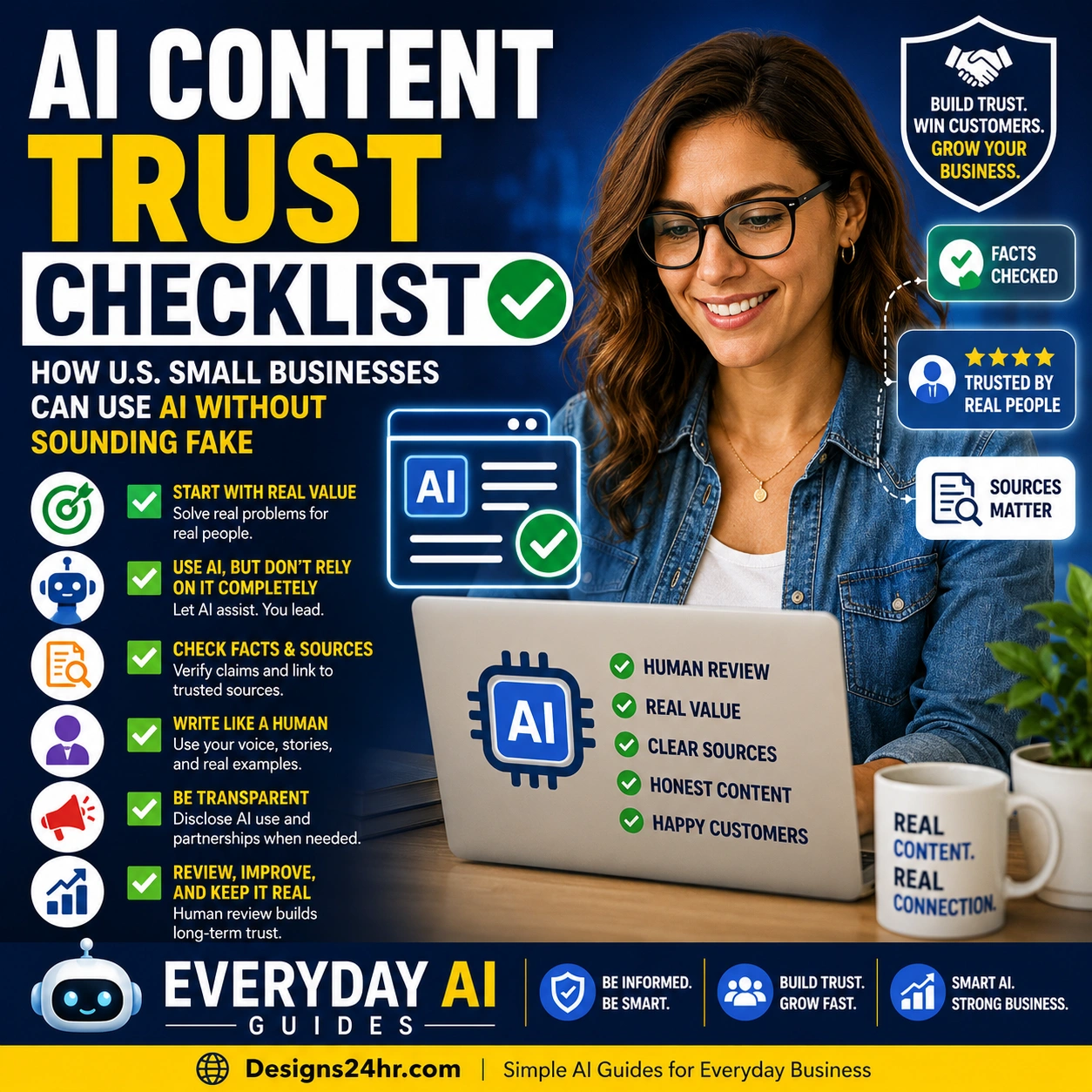
Before writing ad copy with AI, review AI Content Trust Checklist so your campaign sounds helpful, specific, and human instead of fake or over-polished.
ChatGPT Ads Checklist Table
| Checklist item | What to confirm | Why it matters |
|---|---|---|
| Goal | Leads, bookings, sales, signups, calls, or awareness | Prevents unclear testing and wasted budget |
| Offer | One product, service, guide, quote, consultation, or lead magnet | Makes the ad easier to understand |
| Landing page | Fast, mobile-friendly, clear, trustworthy, and conversion-focused | Improves user experience after the click |
| Tracking | UTM links, analytics, conversion measurement, and campaign naming | Shows what actually produces results |
| Budget | Small test budget with clear stop rules | Limits risk while learning |
| Trust | Honest copy, clear pricing, real proof, accurate claims | Protects your brand and improves qualified clicks |
Who Should Test ChatGPT Ads First?
The best early testers are businesses that already understand their offer and know what a good customer action looks like. ChatGPT ads may be worth testing first if you have a strong landing page, a clear conversion goal, and enough patience to measure results before scaling.
Local services
Examples: plumbers, roofers, dentists, attorneys, repair services, home services, and consultants with clear service-area pages.
E-commerce shops
Examples: niche product collections, gift guides, printable products, tools, accessories, and helpful product comparison pages.
Coaches and consultants
Examples: booking pages, free audits, strategy calls, workshops, and specific problem-solving offers.
Lead-generation brands
Examples: downloadable checklists, quote forms, comparison guides, calculators, and newsletter signup pages.
Who Should Wait?
Some small businesses should wait before testing ChatGPT ads. Waiting is not failure. It can be the smarter move if the foundation is not ready.
- Wait if your website does not explain your offer clearly.
- Wait if your landing page is slow, outdated, or hard to use on mobile.
- Wait if you cannot track leads, purchases, calls, or form submissions.
- Wait if you do not know what a profitable customer is worth.
- Wait if your ad copy depends on exaggerated claims or fake urgency.
- Wait if nobody can review and improve the campaign after launch.
Small Business Example
Imagine a small accounting firm in Texas wants to advertise bookkeeping services to new business owners. A weak campaign sends people to a homepage that says “trusted financial solutions” and has no clear offer.
A stronger campaign sends people to a page titled “Monthly Bookkeeping for Texas Small Businesses,” explains who it helps, lists what is included, answers pricing questions, includes real trust signals, and offers a free consultation.
That second version gives ChatGPT users a clearer reason to click and gives the business a better chance to measure real leads.
ChatGPT Ads vs. Google AI Marketing Tools
ChatGPT ads should not replace your entire marketing plan. They should be tested as one possible channel inside a broader advertising and discovery strategy.
Google Ads, Performance Max, Demand Gen, AI Max for Search, and other AI-powered ad tools still matter for search, shopping, YouTube, Discover, Gmail, Maps, and the wider Google ecosystem. For a related overview, read Google AI Marketing Tools Explained.
How to Measure a ChatGPT Ads Test
A simple small-business test should answer three questions: Did the ad get relevant clicks? Did the landing page turn clicks into action? Did the result justify the cost?
OpenAI’s measurement help page says Ads Manager Beta can show performance across campaign, ad group, and ad levels. Metrics include impressions, clicks, spend, CTR, average CPC, average CPM, and conversions when conversion measurement is set up.
Traffic metric
Track impressions, clicks, CTR, and average CPC to understand whether people are engaging.
Landing page metric
Track bounce behavior, time on page, form starts, button clicks, calls, and signups.
Business metric
Track cost per lead, cost per sale, booking quality, and whether the customer value supports the ad cost.
Common Mistakes to Avoid
- Sending paid traffic to a generic homepage instead of a focused landing page.
- Testing too many offers at once and not knowing what worked.
- Using vague ad copy that sounds like every other business.
- Not adding UTM parameters to landing page URLs.
- Tracking clicks but ignoring leads, calls, bookings, or sales.
- Scaling too quickly before the campaign has enough useful data.
- Making claims your landing page cannot prove.
- Letting AI write ad copy without a final human review.
Final Takeaway
ChatGPT ads may become a valuable new channel for U.S. small businesses, but they should be tested carefully. The winners will likely be businesses with clear offers, helpful landing pages, honest copy, strong tracking, and enough patience to improve before scaling.
Before you spend, check your goal, page, offer, tracking, budget, and trust signals. Then run a small test, measure what happened, and improve from real results instead of guessing.
Frequently Asked Questions
What are ChatGPT ads?
ChatGPT ads are sponsored placements that may appear in relevant ChatGPT conversations. They can include an advertiser name, logo or favicon, headline, description, landing page, and creative asset.
Should small businesses test ChatGPT ads?
Some small businesses may want to test ChatGPT ads if they already have a clear offer, a strong landing page, UTM tracking, conversion measurement, and a small test budget. Businesses without those basics should wait.
What should I check before advertising in ChatGPT?
Check your campaign goal, offer, landing page, tracking links, conversion measurement, budget, privacy expectations, and trust signals before launching.
Are ChatGPT ads charged by clicks?
OpenAI’s advertiser help page says ChatGPT Ads support both cost-per-thousand-impressions buying and cost-per-click buying options, depending on the campaign objective.
How can small businesses track ChatGPT ads?
Small businesses can use static UTM parameters, analytics tools, conversion measurement, and Ads Manager reporting metrics such as impressions, clicks, spend, CTR, average CPC, average CPM, and conversions.
Do ChatGPT ads affect ChatGPT answers?
OpenAI says ads do not influence the answers ChatGPT gives and are clearly labeled as sponsored and visually separated from organic answers.
Try These Free Designs24hr Tools Before You Launch
Before sending paid traffic to a landing page, use free tools to tighten your tracking, SEO preview, and keyword balance.
Sources: OpenAI’s official ChatGPT advertising overview, OpenAI Help Center advertiser basics, and OpenAI Help Center measurement guidance. This guide is educational and should not be treated as financial, legal, or platform compliance advice.