Everyday AI Guides · AI Careers & Job Search
You just finished the interview, and now you need a short note that sounds like you, not like a template. A thank you email after interview day is still expected: U.S. career centers and CareerOneStop, which is sponsored by the U.S. Department of Labor, all advise sending one within 24 hours. This guide gives you a ChatGPT prompt, five real-world thank you email after interview examples, subject lines, and a quick check so the final email is accurate, brief and personal.
When: send it within 24 hours of the interview, even if you think it didn’t go well.
What to say: thank the interviewer by name, mention one specific thing you discussed, restate your interest, connect one or two of your skills to the role, add anything important you forgot, and offer to share more.
How long: brief. Most career centers describe about three short paragraphs.
Using ChatGPT: give it your own notes (names, role, one or two real details), ask for a short draft, then edit every line so it’s true and sounds like you.
What to include in a thank you email after interview
CareerOneStop lists the parts a thank you note after interview should cover, whether you send it by email or on paper. Treat this as your checklist before you ask AI to write anything:
- Appreciation for the opportunity and their time.
- Continued interest in the job.
- A brief restatement of your qualifications and skills.
- Background you forgot to mention in the interview, if it matters for the role.
- Follow-up items, such as a website, article or contact you said you’d send.
- The next step, such as the date you agreed to follow up.
MIT’s career office adds one detail that makes the biggest difference: cite something specific you talked about. That single line is what separates a real note from a generic one.
Before you open ChatGPT: gather 6 facts
AI can only personalize what you give it. If you skip this step, you’ll get a polished email that could have been sent by anyone. Write these down right after the interview, while you still remember them:
- The interviewer’s name and job title (CareerOneStop recommends addressing the note by name and title).
- The exact role title.
- One or two specific topics from the conversation, in your own words.
- One qualification or result you want to repeat, and the real example behind it.
- Anything you forgot to say or wish you’d answered better.
- Any next step they mentioned (a timeline, a work sample, a reference list).
Privacy tip: you don’t need to paste the full job description, your home address or anything the company shared in confidence. A first name, the role and a short summary of the topic are enough. In ChatGPT, you can check Settings > Data controls and turn off Improve the model for everyone, or use a Temporary Chat, which OpenAI says doesn’t appear in your history and isn’t used to improve its models (it may be kept for up to 30 days for safety).
The ChatGPT thank you email after interview prompt
Copy this prompt, replace everything in brackets with your own facts, and paste it into ChatGPT. It asks for a short, specific draft and tells the AI not to invent anything.
Tip: press and hold (or click and drag) to highlight the prompt, then copy it.
Write a short thank-you email after a job interview.

Facts (use only these, do not add new claims):
- Interviewer: [name], [job title]
- Role: [role title] at [company]
- Interview type and day: [phone / video / in person], [day]
- Specific topic we discussed: [one or two details in my words]
- Skill or result to restate: [skill + a real example]
- Something I forgot to mention (optional): [detail]
- Next step they mentioned (optional): [timeline or request]

Rules:
- 3 short paragraphs, under 150 words total.
- Warm, professional, plain US English. No cliches like "I am writing to express".
- Mention the specific topic in the first or second sentence.
- End by offering to share anything else they need.
- Give me 3 subject line options under 8 words.
- If a fact is missing, leave a [bracket] instead of guessing.
The “under 150 words” limit is our own editing rule, not an official standard. It keeps the email in line with the “be brief” advice from CareerOneStop and the three-paragraph structure the University of Virginia career center describes.
Follow-up prompts that fix common problems
| Problem with the draft | Follow-up prompt |
|---|---|
| Too long or stiff | “Cut this to about 100 words and make it sound like a real person wrote it.” |
| Too generic | “Rewrite the second sentence so it refers to [specific topic] in my own words.” |
| Over the top | “Remove words like thrilled, passionate and perfect fit. Keep it confident but calm.” |
| Added claims you didn’t give it | “List every fact in this email. Mark any fact that wasn’t in my notes.” |
| Panel interview | “Write a separate version for [name 2], who asked about [topic 2].” |
5 thank you email after interview examples
These examples use made-up names and companies. Use them for structure, not word for word. Dartmouth’s career center labels its own template “Do Not Use Verbatim” for the same reason: a copied note reads as copied.
1. After a one-on-one interview with the hiring manager
Subject: Thank you, Maya

Hi Maya,

Thank you for your time today. I enjoyed hearing about the new onboarding project and how your team plans to cut the first-week paperwork for new hires.

Our conversation confirmed my interest in the HR Coordinator role. At my current job I set up a shared checklist for new employees, and I'd be glad to bring that same organized approach to your team.

Please let me know if I can send anything else. I look forward to hearing about next steps.

Best regards,
Jordan Lee
2. After a panel interview (one email per person)
MIT recommends an individual note to each interviewer. The University of Virginia adds that if you met more than six to eight people, you can thank just the person who coordinated the interview, though individual emails are still preferred. Change the specific detail in each one.
Subject: Thanks for the conversation today

Hi Carlos,

Thank you for joining the panel today. Your question about how I'd handle two urgent requests at once stuck with me, and I appreciated hearing how your team sets priorities each Monday.

I'm very interested in the Project Coordinator position and in supporting that weekly planning rhythm.

Thank you again, and please reach out if you need anything else from me.

Best,
Priya Shah
3. After a phone screen with a recruiter
Subject: Thank you for the call, Dana

Hi Dana,

Thanks for taking the time to talk with me about the Customer Success Specialist role today. It was helpful to learn that the next step is a video interview with the team lead.

I'm excited to keep moving forward. As we discussed, I've attached an updated copy of my resume.

Have a great rest of your week,
Sam Rivera
4. When you forgot to mention something important
CareerOneStop and the U.S. Department of Labor’s interview guide both point out that the thank-you note is a chance to add relevant background you didn’t get to share.
Subject: Thank you, and one more detail

Hi Mr. Thompson,

Thank you for meeting with me this afternoon about the Office Manager position. I enjoyed learning about your plan to move the front desk scheduling online.

One thing I didn't mention: last year I helped my current office switch to an online booking tool and trained four coworkers to use it. I think that experience fits the project you described.

Please let me know if I can provide anything else.

Sincerely,
Alex Morgan
5. When you think the interview didn’t go well
CareerOneStop says to write the note even if the interview didn’t go well, and notes that candidates sometimes drop out. The University of Virginia guide adds that you can use the note to give a better answer to a question you felt you handled poorly. Keep it short and confident, not apologetic.
Subject: Thank you for your time today

Hi Rachel,

Thank you for interviewing me for the Marketing Assistant role today. I've been thinking about your question on measuring a campaign, and I'd like to add a clearer answer: I'd track sign-ups from each channel weekly and share a short summary with the team.

I'm still very interested in the role and would welcome the chance to contribute.

Best regards,
Taylor Brooks
Thank-you email subject lines that work
Keep the subject line short and clear so the email is easy to find. A few safe options:
- Thank you, [Name]
- Thank you for your time today
- Thanks for the conversation about the [Role] role
- Thank you, and one more detail
- Thank you for the call, [Name]
Generic AI draft vs. a personal one
| Generic AI draft | Personal version | Why it’s better |
|---|---|---|
| “I am writing to express my sincere gratitude for the opportunity.” | “Thank you for your time today.” | Shorter and sounds like a person. |
| “I was impressed by your company’s innovative culture.” | “I enjoyed hearing about the new onboarding project.” | Shows you listened (the detail MIT asks for). |
| “I am confident I would be a perfect fit.” | “I set up a shared checklist for new employees at my current job.” | A real example instead of a claim. |
| “I look forward to the possibility of contributing my diverse skill set.” | “Please let me know if I can send anything else.” | A clear, polite close. |
10-point check before you hit Send
- ☐ The interviewer’s name and title are spelled correctly.
- ☐ The role title and company name are exact.
- ☐ One specific detail from the interview is in the first two sentences.
- ☐ Every skill or result in the email is true and something you could explain.
- ☐ Nothing confidential from the interview is repeated in writing.
- ☐ It’s about three short paragraphs.
- ☐ No leftover [brackets] or AI phrases like “as an AI”.
- ☐ Each panel member gets a different detail if you send separate emails.
- ☐ Any attachment you promised is actually attached.
- ☐ You’re sending it within 24 hours (if you’re late, Dartmouth’s advice is to send it anyway).
When to send a thank you email after interview (and when to follow up)
| Situation | What the sources say |
|---|---|
| Thank-you email | Within 24 hours (CareerOneStop, MIT, Harvard Law School, University of Virginia, Dartmouth). The Department of Labor’s interview guide even suggests the same day. |
| Mailed thank-you letter | University of Virginia allows about a week if mailing. Harvard Law School says a handwritten note should arrive within a day or two, and advises against mailed notes to government employers because their mail can be slow. |
| More than 24 hours have passed | Send it anyway. Dartmouth: a late note is much better than none. |
| No reply by the date they gave you | Dartmouth suggests a polite follow-up to the main contact if you haven’t heard back within 5 business days of the date you were given. |
| No date was given | Boston University suggests following up with the hiring manager or main contact if you haven’t heard back within a few weeks. |
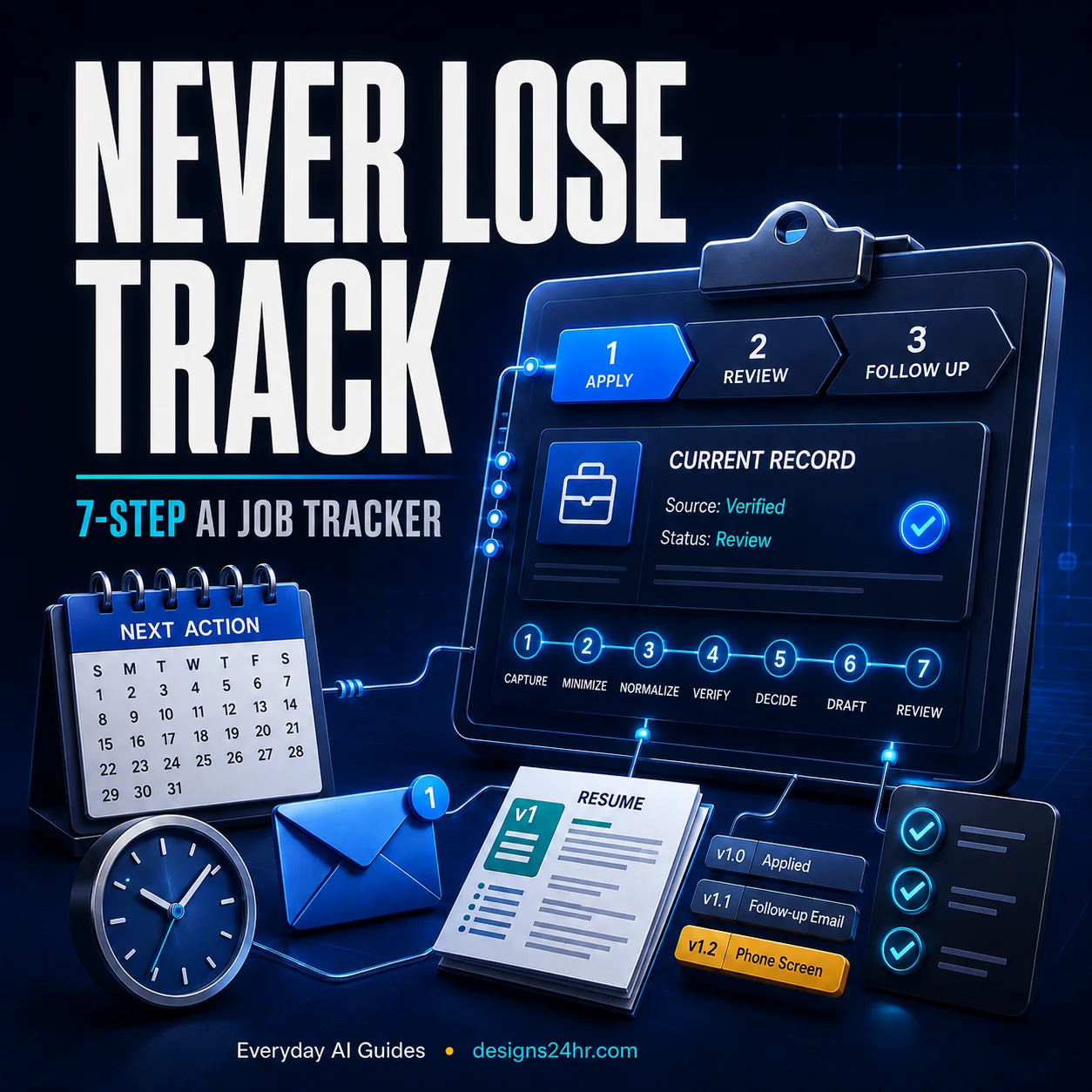
If you’re managing several applications at once, log the interview date, each interviewer and your follow-up date in one place. Our guide on how to track job applications with AI shows a simple way to do that without losing control of the details.
Common mistakes with AI-written thank-you emails
- Sending the first draft. It’s usually too long and too formal. Cut it down.
- Letting AI add skills or numbers. If you didn’t give it a fact, it shouldn’t be in the email.
- Copying one note to every panel member. They may compare emails. Change the detail for each person.
- Overpraising the company. One genuine detail beats three compliments.
- Waiting for the “perfect” email. A clear note sent today is better than a perfect one next week.
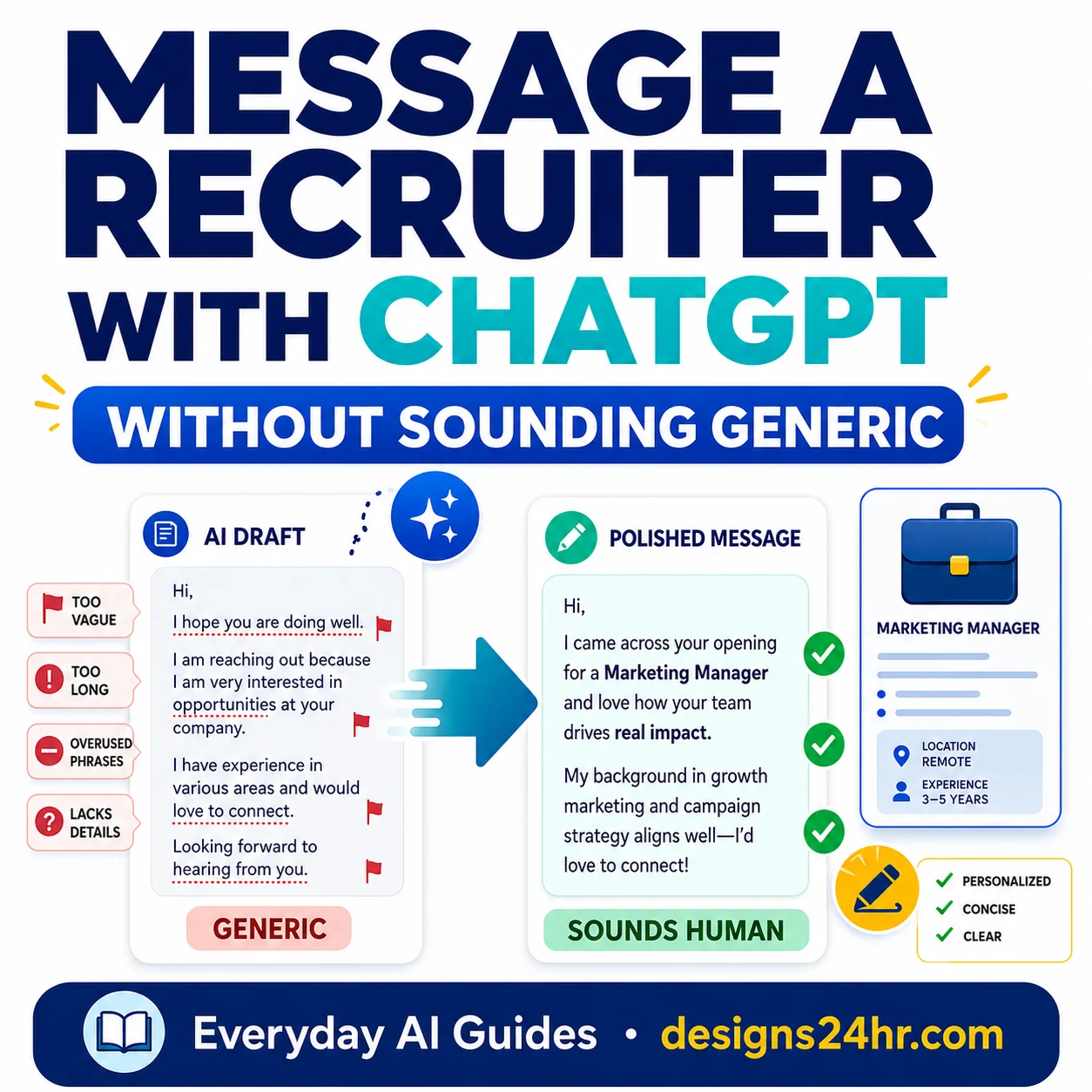
Want to get ready for the next round? Our AI interview practice checklist helps you build honest answers without sounding scripted. And if a recruiter set up the interview through LinkedIn, see how to message a recruiter on LinkedIn for follow-up messages that don’t sound generic.
Frequently asked questions
How long should a thank you email be after an interview?
Brief. CareerOneStop says to be brief but cover the key points, and the University of Virginia describes about three main paragraphs. In practice that’s a few short paragraphs you can read in under a minute.
Is it OK to use ChatGPT to write a thank-you email?
Yes, as a drafting helper. The note still has to be true and personal, so feed it your own details and edit the result. We couldn’t find reliable public data on how many hiring managers can tell when a note was AI-written, so treat any claim about that as UNVERIFIED.
Should I send a separate email to each interviewer?
When you can, yes. MIT recommends an individual note to each person. Boston University says you can also send one note to the whole group or a mix of both, and CareerOneStop says a single note to a key person for distribution can work too.
What if I don’t have the interviewer’s email address?
Dartmouth suggests asking the position contact, hiring manager or recruiter for interviewers’ names and email addresses. You can also send your thanks through the recruiter and ask them to pass it on.
Is it too late to send a thank you email after 2 days?
No. Aim for 24 hours, but Dartmouth’s career center says a late note is much better than none.
Should I send a thank-you email after a phone screen?
Yes. CareerOneStop says to send one after each job interview, and a short note to the recruiter keeps the next step clear.
The bottom line
A good thank you email after interview day is short, specific and sent on time. For a ChatGPT thank you email after interview, let the tool handle the first draft, but you supply the facts and make the final edit. Three short paragraphs, one real detail and a clear close are all you need.
Keep going: practice your next interview with AI, track every application and follow-up date, or message a recruiter without sounding generic.
Free tool: need a second take on your thank you email after interview, or a reply to the recruiter who writes back? Try our free AI Email Reply Generator, then browse more AI careers and job search guides.
Sources
- CareerOneStop (sponsored by the U.S. Department of Labor), Thank-you Notes: what to include, 24 hours, name and title, one note per person; and Get ready to interview: candidates sometimes drop out.
- MIT Career Advising & Professional Development, Professional correspondence guidelines: 24 hours, individual notes, cite something specific.
- University of Virginia Career Center, Post-interview Thank-you: three paragraphs, panels of 6 to 8 people, mailed letters.
- Dartmouth Center for Career Design, Interview and Networking Follow-Up: late notes, 5 business days follow-up.
- Harvard Law School OPIA, Interview Follow-Up: Thank-You Notes: 24 hours, handwritten notes, government employers.
- Boston University Center for Career Development, After Interview: group or individual notes, follow up after a few weeks.
- U.S. Department of Labor VETS, TEAMS Interview Skills Participant Guide (February 2026): same-day follow-up, adding points you forgot.
- OpenAI Help Center, Data controls in ChatGPT: model-training setting and Temporary Chat.
This guide is a documented process based on the sources above, checked on October 29, 2026. The example emails are original illustrations with made-up names, not real messages, and we didn’t test them with employers.
ChatGPT is a trademark of OpenAI. LinkedIn is a trademark of LinkedIn Corporation. Product names are trademarks of their respective owners; no affiliation or endorsement is implied.
This article was created with the help of AI, one of the many ways AI is making useful knowledge easier for everyone to create and access. It is provided for educational purposes only, to help readers understand and use AI tools better.
Get new AI guides every week
Short, practical how-tos and free tools from Designs24hr. No spam, unsubscribe anytime.