AI Meal Planning Checklist: 7 Best Ways U.S. Families Can Save Time and Waste Less Food
AI can help you plan meals faster, use what you already have, build a smarter grocery list, and reduce wasted food. The key is to use AI as a planning helper while still checking allergies, budget, cooking safety, and your real family schedule.
This AI meal planning checklist is written for U.S. families, busy parents, students, caregivers, working adults, and budget-conscious households that want practical meal ideas without making grocery planning complicated.
The goal is not to let AI decide everything for you. The goal is to use AI to organize your ingredients, suggest realistic meals, plan leftovers, and make shopping easier while you stay in control of food safety and family needs.
Trust note: AI can suggest meal ideas, but it is not a doctor, dietitian, or food-safety authority. Always check allergies, dietary needs, expiration dates, safe cooking temperatures, and leftover storage before serving food.
What Is an AI Meal Planning Checklist?
An AI meal planning checklist is a simple process that helps you use AI to plan meals, build a grocery list, use leftovers, and organize food tasks for the week. It keeps AI useful without letting it ignore your real budget, schedule, ingredients, allergies, or preferences.
Instead of asking AI, “What should I eat?” a better approach is to tell AI what you already have, how many people you are feeding, how much time you have, and what you want to avoid buying.
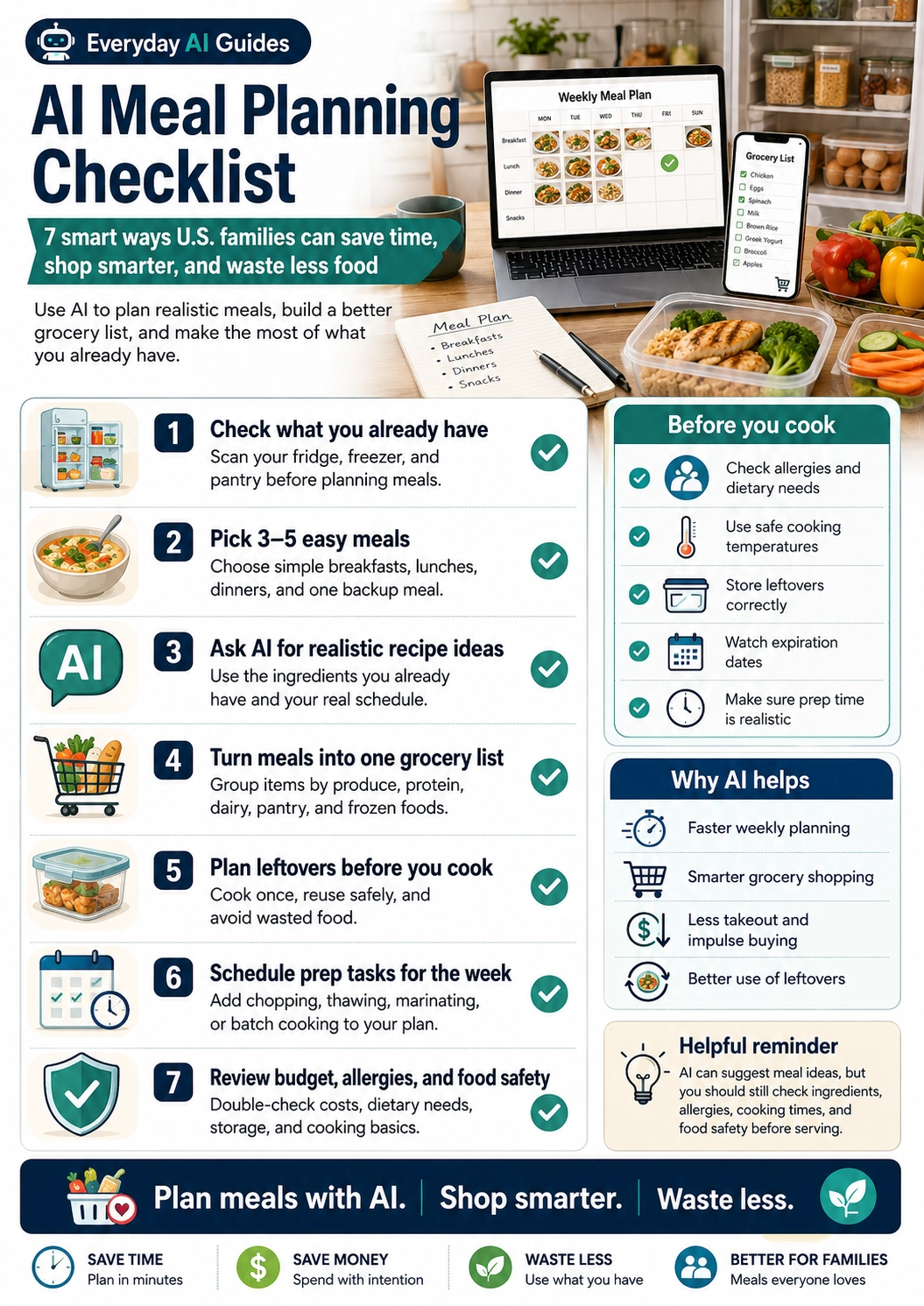
- Check your fridge, freezer, and pantry first.
- Choose simple meals that fit your week.
- Ask AI for recipe ideas using real ingredients.
- Turn meals into one organized grocery list.
- Plan leftovers before you cook.
- Review allergies, storage, budget, and food safety.
Why AI Can Help With Weekly Meal Planning
Weekly meal planning can feel harder than it should. You may have random ingredients in the fridge, school nights with little cooking time, lunch boxes to pack, leftovers to use, and grocery prices to think about.
AI can help by turning scattered ingredients and schedule details into a practical plan. For example, it can suggest three dinners from what you already have, group grocery items by category, or create a simple prep schedule for chopping vegetables, thawing meat, or packing lunches.
USDA food planning resources and budget guidance encourage planning meals before shopping, making a grocery list, and using ingredients intentionally. AI can support those habits by making the planning step faster and less stressful.
For recipe ideas, you can try the AI Recipe Generator from Designs24hr. It helps turn ingredients into meal ideas, includes meal type and prep time options, and reminds users to check allergens before cooking.
Quick Answer: What Can AI Do for Meal Planning?
Suggest dinners, lunches, snacks, or breakfast ideas based on ingredients you already have.
Turn a weekly meal plan into one list grouped by produce, protein, dairy, pantry, and frozen foods.
Suggest safe ways to reuse cooked ingredients for lunches, soups, wraps, bowls, or second dinners.
Break meal planning into simple tasks like thawing, chopping, marinating, batch cooking, and packing.
The 7-Step AI Meal Planning Checklist
Use this AI meal planning checklist before grocery shopping, before batch cooking, or anytime you feel stuck deciding what to make with what you already have.
“`1Check Your Fridge, Freezer, and Pantry First
Before asking AI for meal ideas, write down what you already have. This is the most important step if you want to save money and reduce food waste.
Check fresh produce, proteins, dairy, frozen foods, pantry staples, sauces, grains, canned goods, and leftovers. Also check expiration dates and anything that needs to be used soon.
Prompt to use: “Create meal ideas using these ingredients I already have: [list ingredients]. Prioritize items that need to be used soon and avoid adding expensive specialty ingredients.”
2Pick Your Weekly Meal Goal
A meal plan works better when it matches your real week. Do you need fast school-night dinners, work lunches, budget meals, freezer meals, vegetarian meals, or simple meals for picky eaters?
Choose a realistic goal before asking AI. For many U.S. families, three to five planned meals plus one leftover night is easier to follow than a perfect seven-day schedule.
Simple weekly meal goals
- Three easy dinners for busy weeknights.
- Two lunch-prep meals for work or school.
- One leftover night to avoid wasting food.
- One backup meal from pantry or freezer staples.
- One flexible night for family plans or schedule changes.
3Ask AI for Realistic Recipe Ideas
AI meal ideas are only useful if they fit your kitchen, time, ingredients, and skill level. Ask for simple recipes with common U.S. grocery ingredients unless you want a specific cuisine or cooking style.
Give AI your prep-time limit, number of servings, dietary needs, and what you do not want. This helps avoid unrealistic recipes with too many steps or ingredients you would never buy.
Prompt to use: “Suggest 5 realistic family dinners using these ingredients: [list]. Keep prep under 30 minutes, use common grocery items, include leftovers when possible, and flag anything that may need an allergy or food-safety check.”
4Turn Meals Into One Grocery List
Once you choose meals, ask AI to turn them into one grocery list. A grouped list can make shopping faster and reduce impulse purchases.
Before you shop, cross off anything you already have. This prevents buying duplicate pantry items, extra sauces, or produce that may go bad before you use it.
| Grocery category | Examples to check before buying |
|---|---|
| Produce | Onions, lettuce, carrots, peppers, herbs, potatoes, fruit |
| Protein | Chicken, eggs, ground turkey, beans, tofu, fish, beef |
| Dairy | Milk, yogurt, cheese, cream, butter |
| Pantry | Rice, pasta, canned tomatoes, tortillas, oats, spices, broth |
| Frozen | Vegetables, fruit, frozen meals, fish, chicken, waffles |
5Plan Leftovers Before You Cook
Leftovers are easier to use when you plan them before the meal is cooked. Ask AI how one dinner can become another lunch or second meal.
For example, grilled chicken can become wraps, rice bowls, soup, salad, tacos, or pasta. Roasted vegetables can become omelets, grain bowls, sandwiches, or side dishes.
Food safety matters here. USDA guidance says most cooked leftovers should be used within 3 to 4 days when refrigerated properly, and leftovers should be reheated to 165°F.
Prompt to use: “Help me turn this dinner into safe leftovers for lunch tomorrow. Suggest storage notes, reheating reminders, and a second meal idea.”
6Schedule Prep Tasks During the Week
A meal plan can fail when prep tasks are forgotten. AI can help turn meals into a simple schedule for shopping, chopping, thawing, marinating, cooking, and packing leftovers.
For example, if Wednesday dinner needs thawed chicken, add that task to Tuesday. If Thursday is busy, plan a slow cooker, sheet pan, or leftover meal instead of a complicated recipe.
You can use the AI Daily Task Planner to organize grocery shopping, meal prep, cooking, and cleanup into a realistic task plan.
Prompt to use: “Turn this meal plan into a weekly prep schedule. Include grocery shopping, thawing, chopping, batch cooking, leftover nights, and quick backup meals.”
7Review Safety, Allergies, and Budget Before Shopping
The last step in the AI meal planning checklist is the review. AI can miss allergies, hidden ingredients, unsafe cooking assumptions, unrealistic prep time, or high-cost items.
Before shopping or cooking, check the plan against your household needs. Look for allergens, dietary restrictions, expired foods, safe cooking temperatures, storage limits, and whether the grocery list fits your budget.
Before you cook, check:
- Allergies and dietary restrictions.
- Expiration dates and food quality.
- Safe cooking temperatures.
- Leftover storage and reheating rules.
- Realistic prep and cleanup time.
- Grocery cost and ingredient overlap.
Good vs. Bad AI Meal Planning Examples
AI meal planning works best when your prompt includes real ingredients, time limits, budget needs, and safety reminders.
“`“Make me a weekly meal plan.”
Why it is weak: It gives AI no budget, schedule, ingredient list, family size, allergies, or prep-time limit.
“Create a 5-day dinner plan for a family of four using chicken breast, rice, frozen broccoli, eggs, tortillas, canned beans, and spinach. Keep dinners under 35 minutes, include two leftover lunches, avoid peanuts, and make one grouped grocery list.”
Why it works: It gives AI clear ingredients, servings, timing, allergy information, leftover needs, and grocery-list instructions.
What AI Should Not Decide for You
AI can make planning easier, but it should not make health, allergy, or food-safety decisions without your review.
- Do not rely on AI alone for allergy safety.
- Do not use AI as medical nutrition advice.
- Do not trust estimated calories or macros as exact numbers.
- Do not ignore expiration dates or signs of spoiled food.
- Do not assume AI knows your child’s, baby’s, or family member’s dietary needs.
- Do not follow unclear cooking instructions for meat, poultry, seafood, or eggs.
- Do not keep leftovers longer than food-safety guidance recommends.
Food Safety Tips Before Following AI Recipes
AI-generated recipes can be creative, but the cooking and storage decisions still belong to you. A good recipe plan should be checked against basic food-safety habits.
Wash hands, counters, cutting boards, and utensils before preparing food.
Keep raw meat, poultry, seafood, and eggs away from ready-to-eat foods.
Use a food thermometer for foods that need a safe internal temperature.
Refrigerate perishable foods and leftovers promptly in shallow containers.
For detailed food-safety basics, review FDA safe food handling guidance and USDA leftovers and food safety guidance.
Budget-Friendly AI Meal Planning Tips
AI cannot guarantee grocery savings because prices vary by store, city, season, family size, and diet. But it can help you make a clearer plan before shopping.
Use AI to shop with more intention
- Ask for meals using pantry staples first.
- Choose recipes that share ingredients across multiple meals.
- Plan one leftover night each week.
- Ask for lower-cost protein swaps, such as beans, eggs, or chicken thighs.
- Use frozen vegetables when fresh produce may go bad too quickly.
- Build a grocery list before opening a shopping app or walking into the store.
USDA monthly food cost reports can help families understand official food-plan cost categories, while Nutrition.gov meal planning resources offer practical shopping and planning support.
AI Meal Planning for Different Household Situations
Ask for fast dinners, lunchbox ideas, and backup meals for school nights.
Ask for microwave-friendly, low-cost meals using dorm or apartment basics.
Ask for lunch prep, freezer-friendly meals, and quick dinners after work.
Ask for simple meals that fit dietary restrictions, easy chewing, or routine schedules.
When you are choosing between cooking, using leftovers, grocery shopping, or ordering takeout, the Decision Helper can help you slow down and compare the options before spending money.
Final AI Meal Planning Checklist Before You Shop
Use this AI meal planning checklist before your next grocery trip or weekly meal prep session.
- I checked my fridge, freezer, and pantry first.
- I listed ingredients that need to be used soon.
- I picked realistic meals for my actual week.
- I asked AI for meals that fit my time, budget, and preferences.
- I turned the plan into one grouped grocery list.
- I crossed off items I already have.
- I planned leftovers safely.
- I scheduled prep tasks like thawing, chopping, and batch cooking.
- I checked allergies, expiration dates, safe temperatures, and storage rules.
Helpful Designs24hr Tools for Meal Planning
These free Designs24hr tools can help you turn ingredients, tasks, and decisions into a more practical weekly food plan.
- Use the AI Recipe Generator to turn ingredients into meal ideas and shopping-list inspiration.
- Use AI Daily Task Planner to schedule grocery shopping, meal prep, cooking, and leftover nights.
- Use Decision Helper when you are deciding whether to cook, shop, use leftovers, or order takeout.
- Explore free AI tools from Designs24hr for everyday planning, writing, learning, and productivity tasks.
Trusted Resources for Meal Planning and Food Safety
These external resources can help you review grocery budgeting, meal planning, leftovers, and safe food handling.
FAQs About the AI Meal Planning Checklist
“`What is an AI meal planning checklist?
An AI meal planning checklist is a simple set of steps that helps you use AI to plan meals, create grocery lists, use ingredients you already have, schedule prep tasks, and review food safety before cooking.
Can AI help me plan weekly family meals?
Yes, AI can help suggest weekly meals based on your ingredients, schedule, budget, and preferences. You should still review the meals for allergies, dietary needs, cooking time, and food safety.
How can AI help reduce food waste?
AI can help you build meals around ingredients already in your fridge, freezer, or pantry. It can also suggest ways to reuse leftovers safely and turn extra ingredients into soups, stir-fries, salads, casseroles, or lunches.
Can AI create a grocery list?
Yes, AI can turn a meal plan into a grocery list and group items by category, such as produce, protein, dairy, pantry, frozen foods, and household basics. You should still check what you already have before shopping.
Is AI meal planning safe?
AI meal planning can be helpful, but you should always check allergens, expiration dates, safe cooking temperatures, and leftover storage rules. AI can make mistakes, so use it as a planning assistant, not a food-safety authority.
Can AI help with budget-friendly meals?
Yes, AI can suggest lower-cost meals, pantry-based recipes, leftovers, and grocery list ideas. It should not be treated as a guarantee of savings because prices vary by store, city, season, and household needs.
What should I tell AI before asking for meal ideas?
Tell AI what ingredients you already have, how many people you are feeding, your meal type, prep time, budget preference, allergies, dietary restrictions, and whether you want leftovers.
What should I not rely on AI for when planning meals?
Do not rely on AI alone for medical diet advice, allergy safety, infant feeding, foodborne illness risk, or exact nutrition tracking. For medical or specialized nutrition needs, consult a qualified professional.
Can AI help with leftovers?
Yes, AI can suggest ways to reuse leftovers, but you should follow food-safety guidance for storage time, reheating, and refrigeration. When in doubt, do not risk unsafe food.
How often should I use an AI meal planning checklist?
A weekly checklist works well for most families. You can use it before grocery shopping, before batch cooking, or anytime you feel stuck deciding what to cook with what you already have.
Final Thoughts
An AI meal planning checklist can make weekly food planning easier, especially when you use it to check what you already have, choose realistic meals, build one grocery list, and plan leftovers before food goes to waste.
AI can save time during the planning stage, but the final food decisions should still come from your real ingredients, budget, family preferences, allergies, schedule, and food-safety basics.
Start with the AI Recipe Generator, then use this checklist to review your plan before shopping, cooking, storing, or serving meals.