AI salary negotiation practice can help you rehearse a difficult conversation before speaking with a recruiter, hiring manager, or current employer. It can simulate objections, help organize your talking points, and show where your response sounds uncertain. However, AI cannot determine your exact market value, verify an employer’s budget, or guarantee that a counteroffer will succeed.
The best approach is to research first, practise several realistic scenarios, and then review every AI-generated suggestion using your own judgment. This 12-check process will help you prepare a truthful, professional response without relying on invented salary figures, fake leverage, or generic scripts.
Quick Answer
AI salary negotiation practice works best when you give the tool verified information about the role, location, offer, experience level, and your real achievements. Ask it to simulate a realistic employer, practise several forms of pushback, and provide feedback after the role-play. Before using any suggested response, fact-check its salary claims, remove confidential information, and rewrite the wording in your natural voice.
What Is AI Salary Negotiation Practice?
AI salary negotiation practice is a form of role-play. You provide the situation, such as a new job offer, promotion discussion, counteroffer, or request for a raise. The AI responds as a recruiter or manager so you can practise what to say next.
A useful session is interactive. Instead of asking for one polished script and copying it, you respond one step at a time. The simulated employer may say that the budget is fixed, the offer is already competitive, internal equity limits flexibility, or a fast decision is required. You then practise asking calm, specific questions without exaggerating your leverage.
Important distinction: AI can help you rehearse the conversation, but it should not be treated as an authoritative salary database, legal adviser, financial adviser, or source of confidential employer information.
You can use the free AI Interview Coach to practise salary expectations, counteroffers, benefits, promotion conversations, and compensation flexibility. Treat every generated response as a preparation draft rather than a statement you must repeat word for word.
What to Prepare Before Practising With AI
Role-play becomes more useful when the input is accurate. Gather the following information before asking AI to simulate a negotiation.
The negotiation type
Clarify whether you are responding to a new offer, discussing a promotion, requesting a raise, negotiating a freelance rate, or reconsidering an existing package.
The actual role
Record the job title, seniority, main responsibilities, industry, location, work arrangement, and any unusual requirements.
The complete offer
Review base salary, bonuses, paid leave, working hours, benefits, equity, start date, review timing, and any conditions attached to the offer.
Your evidence
List relevant experience, skills, measurable results, certifications, responsibilities, and achievements you can explain honestly.
Your priorities
Decide which parts of the package matter most and which alternatives would still make the opportunity attractive.
Your decision boundaries
Consider your target, acceptable outcome, unresolved questions, and what would make you decline or request more time.
Do not ask AI to invent your target salary. A broad national average may be misleading when the real role, location, seniority, industry, hours, or compensation structure is different.
AI Salary Negotiation Practice Checklist: 12 Checks
Complete these checks in order. The first six improve the information going into the role-play. The final six improve the rehearsal and the response you eventually use.
Know the situation
Define the exact conversation you are preparing for. A new-offer counteroffer requires different wording from an annual raise request or promotion discussion.
Research market pay
Compare the actual occupation, location, experience level, and industry using current, identifiable sources. Record the source date and what each number represents.
Review the full offer
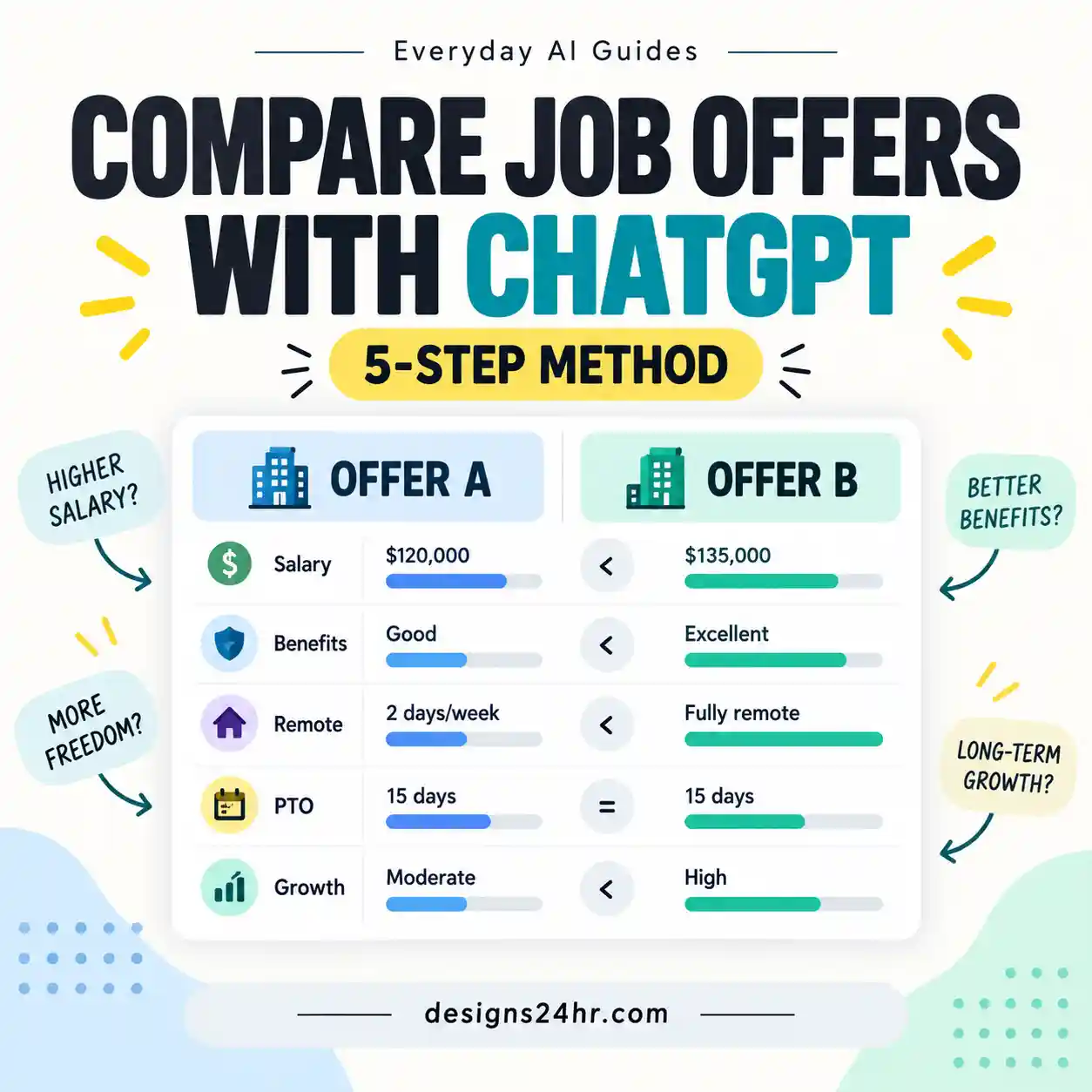
Do not compare base salary alone. Review bonuses, benefits, leave, schedule, equity, relocation support, start date, and compensation-review timing.
List your evidence
Prepare two or three strong reasons for your request. Use relevant responsibilities, skills, outcomes, qualifications, or market evidence rather than personal expenses.
Set your range
Identify your preferred outcome, acceptable range, and decision boundary. Keep these figures grounded in research and the complete package.
Protect your privacy
Remove names, addresses, identification numbers, confidential employer data, private client information, and unnecessary personal details before using an AI tool.
Give AI the right role
Ask AI to act like a realistic recruiter or manager. Tell it not to agree immediately and not to invent employer policies, budgets, or salary data.
Practise your opening
Rehearse a brief response that expresses interest, acknowledges the offer, states your request, and connects that request to credible evidence.
Rehearse employer pushback
Practise responding when the employer mentions a fixed budget, standard range, internal equity, final offer, delayed review, or urgent deadline.
Explore alternatives
Prepare questions about other compensation elements when base salary cannot change. Prioritize the alternatives that have genuine value to you.
Fact-check AI advice
Verify salary ranges, employer claims, legal statements, negotiation customs, and suggested deadlines before relying on them.
Finish with a human-reviewed plan
Rewrite the final wording in your natural voice, practise it aloud, prepare follow-up questions, and decide how you will respond to each likely outcome.
The Three-Round AI Negotiation Practice Method
A single easy role-play may create false confidence. Use three rounds that become progressively more difficult.
Cooperative recruiter
The employer is interested, asks why you want a higher figure, and has limited but genuine flexibility.
Budget resistance
The employer says the salary band is restricted and asks whether another part of the package could resolve the gap.
Final-offer pressure
The employer describes the offer as final or asks for a quick decision. Practise staying calm without bluffing or issuing threats.
What to review after every round
- Did you state your request clearly?
- Did you connect the request to relevant evidence?
- Did you ask useful questions instead of arguing?
- Did you avoid inventing another offer or employer policy?
- Did your wording remain professional under pressure?
- Did you identify a practical next step?
Practising aloud matters because a response that looks polished on a screen may sound unnatural when spoken. The AI Interview Practice Checklist can help you review delivery, specificity, truthfulness, and clarity before the real conversation.
Salary Negotiation Objection Matrix
Employer pushback does not always mean the conversation has failed. It may indicate a genuine limit, a request for more evidence, a standard negotiation step, or a need to discuss another part of the offer.
| Employer response | What it may mean | What to practise asking |
|---|---|---|
| “The budget is fixed.” | Base salary may have little or no flexibility. | “Which other parts of the compensation package may be flexible?” |
| “This is our standard offer.” | The employer may be referring to an internal band or starting level. | “Could you explain how placement within the range was determined?” |
| “We cannot increase the base salary.” | Other compensation elements may still be open for discussion. | “Could we discuss the bonus, review date, leave, schedule, or professional-development support?” |
| “Your experience does not support that figure.” | The employer may need more relevant evidence or may value different qualifications. | “Which experience or performance criteria would support progression to that level?” |
| “This is our final offer.” | The employer may have reached its limit, although you can still clarify the package. | “May I review the complete offer in writing before making my decision?” |
| “We need an answer today.” | The employer is requesting a rapid decision. | “I remain interested. Could I have until [specific reasonable time] to review the complete terms carefully?” |
Useful mindset: Your goal is not to “win” every exchange. Your goal is to understand the offer, communicate your evidence, ask appropriate questions, and make an informed decision.
A Safe AI Salary Negotiation Practice Prompt
Replace the bracketed details with verified, non-confidential information. Do not paste a complete offer letter without first removing identifying and private details.
Act as a realistic recruiter or hiring manager conducting a salary negotiation role-play. Situation: – Negotiation type: [new offer, raise, promotion, or counteroffer] – Role: [job title and seniority] – Location: [general city, state, region, or country] – Current offer or compensation: [verified non-confidential summary] – My researched range: [range and source] – My relevant evidence: [real skills, responsibilities, achievements, or qualifications] – My priorities: [base salary, bonus, leave, flexibility, start date, review date, or other priorities] Rules: 1. Use only the information I provide. 2. Do not invent salary data, employer policies, competing offers, budgets, or legal requirements. 3. Respond as the employer one message at a time. 4. Do not agree too quickly. 5. Begin cooperatively, then introduce realistic budget resistance and final-offer pressure. 6. Ask me questions when my reasoning is unclear. 7. Do not guarantee that any negotiation strategy will succeed. 8. Wait until the role-play ends before giving feedback. After the role-play, evaluate: – Clarity of my request – Strength and relevance of my evidence – Professional tone – Response to objections – Claims that require external verification – Wording that sounds unnatural or too aggressive – The strongest next practice step Begin by presenting the employer’s opening response.
Review the privacy policy and data settings of the AI service you use before entering employment-related information.
How to Fact-Check AI Salary Advice
AI can generate a convincing explanation even when its assumptions are wrong. Review each important claim before turning the output into a real counteroffer.
- Source: Can you identify where the salary figure came from?
- Date: Is the information current enough for the market you are researching?
- Location: Does the figure match the relevant city, state, region, or country?
- Role: Does it match the actual occupation rather than a similar-sounding title?
- Seniority: Does it reflect the appropriate experience and responsibility level?
- Compensation type: Is the number base salary, total cash compensation, or total compensation?
- Employer claim: Did the AI invent a salary band, budget, policy, or negotiation rule?
- Legal statement: Does the response make jurisdiction-specific claims that require an official source or qualified professional?
- Leverage: Does the script suggest exaggerating achievements or implying a competing offer that does not exist?
- Tone: Would you feel comfortable saying the response naturally and defending every claim?
The U.S. Occupational Employment and Wage Statistics program publishes wage estimates for occupations across national, state, metropolitan, nonmetropolitan, and industry groupings. These figures can inform research, but they are not a guaranteed offer for a specific person or company.
What Else Can You Negotiate Besides Base Salary?
Employers differ, and none of these items is guaranteed to be available. Still, it can be useful to identify alternatives before the conversation so you do not make decisions under pressure.
Compensation can include more than salary. The U.S. Equal Employment Opportunity Commission explains that compensation can include salary, overtime, bonuses, stock options, vacation pay, insurance, reimbursements, and benefits.
Good and Bad AI Negotiation Examples
Example 1: Unsupported demand versus evidence-based request
“I know people in this role earn much more, so I need the salary increased to $100,000.”
Why it is weak: The source is unclear, the comparison may not match the role, and the wording does not explain the candidate’s relevant value.
“I am enthusiastic about the role. Based on the responsibilities, the location-specific range I researched, and my experience leading similar projects, could we discuss a base salary closer to $100,000?”
Why it is stronger: It expresses interest, identifies the evidence, and opens a professional discussion without presenting the outcome as an entitlement.
Example 2: Fake leverage versus honest leverage
“Another company has already offered me more, so you will have to beat it.”
Why it is weak: This is dishonest when no competing offer exists and may damage trust.
“I am comparing the complete package with my researched market range and the scope of the role. Is there flexibility in the base salary or another part of the offer?”
Why it is stronger: It uses truthful decision criteria and asks a clear question.
Example 3: Ultimatum versus collaborative question
“That offer is too low. Increase it or I am walking away.”
Why it is weak: It ends the discussion before confirming whether flexibility or alternatives exist.
“Thank you for explaining the limit. The current figure remains below the range I was targeting. Could we review whether the bonus, leave, flexibility, or compensation-review date can be adjusted?”
Why it is stronger: It acknowledges the response, explains the concern, and explores concrete alternatives.
Need help making your final message sound calmer or more professional? Use How Do I Say This? to rewrite your draft, then check that every fact and number remains accurate.
When AI Practice Is Not Enough
A role-play tool cannot understand every contract, workplace, law, benefit plan, or personal risk. Consider appropriate human or professional guidance when:
- The offer includes complex equity, commission, deferred compensation, or repayment terms.
- You do not understand contract language or the effect of a restrictive clause.
- You believe discrimination, retaliation, wage theft, or another employment-rights issue may be involved.
- The discussion concerns executive compensation or unusually high financial stakes.
- You are being pressured to accept without enough time to understand the terms.
- The employer’s statements conflict with the written offer.
- You need advice about local salary-history, pay-transparency, tax, or employment rules.
Jurisdiction matters: Employment, compensation, salary-history, and pay-transparency rules vary by location and may change. Check current official guidance for the relevant jurisdiction or seek qualified advice.
Final Salary Negotiation Readiness Scorecard
Give yourself one point for each completed item. Be strict: “AI gave me a number” does not count as verified research.
- I verified a relevant compensation range.
- I reviewed the complete offer.
- I identified my preferred outcome.
- I considered my decision boundary.
- I prepared truthful supporting evidence.
- I practised my opening response.
- I rehearsed at least three objections.
- I prioritized realistic alternatives.
- I fact-checked the AI-generated advice.
- I practised my final wording aloud.
Practise the Conversation Before It Happens
Use the free AI Interview Coach to rehearse salary expectations, counteroffers, benefits, promotions, and employer pushback. Enter only non-confidential information, keep every achievement truthful, and personalize the final response.
Open the Free AI Interview CoachContinue Your Job-Search Preparation
Frequently Asked Questions
Can AI help me practise salary negotiation?
Yes. AI can simulate a recruiter or manager, introduce common objections, help you organize a response, and provide feedback. It cannot confirm the employer’s real budget, determine your exact market value, or guarantee a successful outcome.
What information should I give an AI negotiation tool?
Provide a non-confidential summary of the role, location, negotiation type, offer, researched range, priorities, and truthful supporting evidence. Remove names, identification numbers, private employer information, client data, and other unnecessary personal details.
Can AI calculate the salary I should request?
AI can help organize research, but it should not be trusted to invent a target figure. Verify current wage information for the occupation, location, industry, seniority, and compensation type using identifiable sources.
How many times should I practise the negotiation?
Practise until you can explain your request calmly without reading a script. At minimum, rehearse a cooperative conversation, budget resistance, and a final-offer or time-pressure scenario.
Should I negotiate salary by email or phone?
The best format depends on the employer, situation, and complexity of the offer. A live conversation allows immediate discussion, while email creates a written record and gives you time to review wording. You can also discuss the offer verbally and request the final terms in writing.
What can I negotiate besides base salary?
Depending on the employer, possible discussion areas may include bonuses, paid leave, schedule flexibility, remote-work arrangements, start date, title, professional development, relocation support, equipment, equity, or an earlier compensation review.
Is it safe to paste a job offer into an AI tool?
Avoid pasting an unedited offer containing names, addresses, signatures, contact details, identification data, confidential terms, or proprietary information. Use a minimized summary and review the AI service’s privacy policy, retention settings, and data controls first.
What should I do if the employer says the offer is final?
Stay professional, clarify the complete package, ask whether any non-salary elements remain flexible, and request reasonable time to review the written terms. Then compare the offer with your priorities and decision boundaries without bluffing.
Sources and Further Research
- U.S. Bureau of Labor Statistics: Using Occupational Employment and Wage Statistics During Salary Negotiations
- U.S. Bureau of Labor Statistics: Occupational Employment and Wage Statistics
- CareerOneStop Salary Finder
- U.S. Department of Labor: Salary Negotiation Workshop
- U.S. Equal Employment Opportunity Commission: Equal Pay and Compensation Discrimination