Everyday AI Guides · AI for Families & Kids
A ChatGPT bedtime story works best when a parent writes the prompt, reads the story first, and then reads it aloud. This guide gives you 12 copy-ready prompts for short, calm and personal stories, split by age, plus the official OpenAI rules on age and privacy that matter before you type your child’s name into a chat.
To get a good ChatGPT bedtime story, use your own account and tell ChatGPT five things: your child’s age, how long the story should be, who the main character is, what your child loves, and that the ending must be calm and sleepy. Then read the story yourself before bedtime and change anything that doesn’t fit your family.
- Open a new chat in your own ChatGPT account (a Temporary chat keeps it out of your history).
- Copy one of the prompts below and fill in the brackets.
- Read the story first. Ask for changes (“calmer,” “shorter,” “no villain”) until it fits.
- Read it aloud to your child. Save the favorites somewhere you control.
Before you start: who should use ChatGPT for bedtime stories
ChatGPT is not built for young children to use on their own. OpenAI’s Terms of Use say you must be at least 13 (or the minimum age in your country), and anyone under 18 needs a parent’s or legal guardian’s permission. So for a preschooler or a first grader, the simplest setup is this: you run the chat on your own account, and your child hears the story from you.
That setup has a second benefit. The Terms also warn that ChatGPT can produce incomplete, incorrect or offensive output, and that you should review output before you use or share it. A quick read-through before lights-out is exactly that review, and it lets you skip anything that might worry a sensitive child.
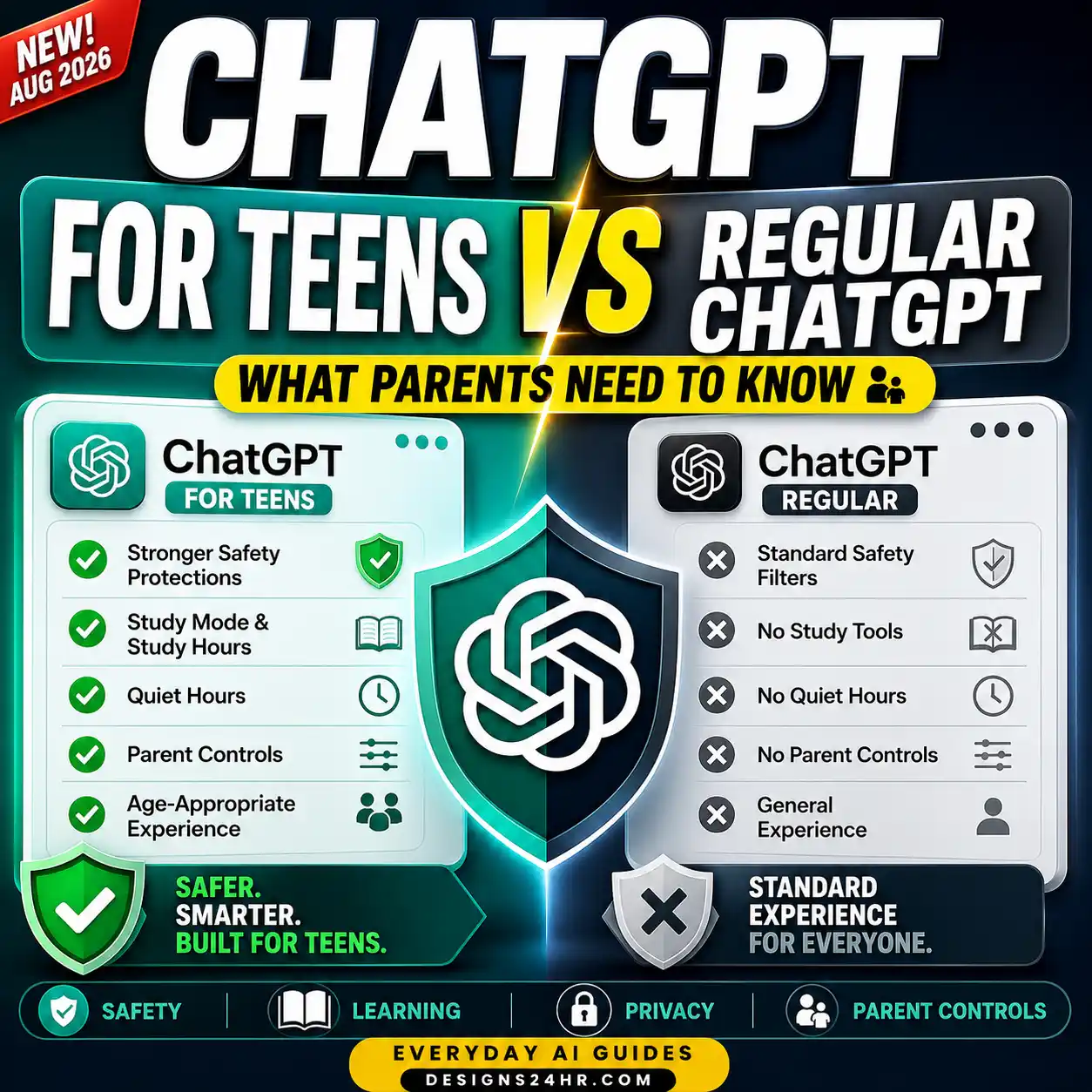
If you have a teen who wants to write stories for a younger sibling, look at how to set up ChatGPT parental controls first. Parental controls apply to linked teen accounts, not to young kids.
The ChatGPT bedtime story formula: 5 ingredients
A one-line request like “tell me a bedtime story” usually gets a generic tale. Adding these five ingredients is what turns a ChatGPT bedtime story into one that sounds like it was made for your child.
| Ingredient | Why it matters | Example wording |
|---|---|---|
| Age | Sets vocabulary, sentence length and how much plot your child can follow. | “for a 4-year-old” |
| Length | Keeps bedtime on schedule. Words are easier for ChatGPT to follow than minutes. | “about 300 words” |
| Main character | Gives the story a hero your child cares about. | “a sleepy turtle named Pip” or “a girl named [first name]” |
| Interests | Makes it feel personal without sharing private details. | “she loves trains and strawberries” |
| Calm rules | Stops cliffhangers, chases and scary twists right before sleep. | “gentle, no villains, ends with everyone falling asleep” |
Word counts in this guide are starting points, not research-backed rules. Watch your own child: if they drift off halfway through, make the next ChatGPT bedtime story shorter; if they ask for “one more,” a second tiny story is often easier than a longer first one.
12 copy-ready ChatGPT bedtime story prompts
Each prompt is plain text and gives you one ChatGPT bedtime story per reply. Tap or click inside a box, highlight the text, copy it, and paste it into ChatGPT. Replace everything in [brackets].
Short bedtime stories
1. The classic short story
Write a calm bedtime story for a [age]-year-old. About 300 words. The main character is [character]. Use simple words and short sentences. No villains, no scary parts, no cliffhanger. End with the character safe, cozy and falling asleep.
Best for: a regular weeknight when you want one ChatGPT bedtime story and lights out.
2. The tiny story for toddlers
Write a very short bedtime story for a 2-year-old, about 120 words. Repeat one gentle line three times, like "and the moon said goodnight." Use only words a toddler knows. End with "Goodnight, [nickname]."
Best for: toddlers who like repetition and a familiar last line.
3. The “one more story” mini
My child asked for one more story. Write a 100-word bedtime story about [character] that is even calmer than usual. Nothing exciting happens. Describe soft sounds, warm blankets and slow breathing. End with the character asleep.
Best for: the second request of the night, when you want sleep, not plot.
Personalized bedtime stories
4. Built around your child’s interests
Write a bedtime story for a [age]-year-old named [first name or nickname]. They love [interest 1], [interest 2] and [favorite color]. Put all three in the story. About 350 words. Gentle adventure, happy ending, and the last scene happens in a cozy bed.
A first name or nickname is all a ChatGPT bedtime story needs to feel personal. More on privacy below.
5. Today, retold as a story
Turn my child's day into a gentle bedtime story. Today they [two or three simple things, for example: went to the park, helped bake muffins, saw a big dog]. Make [first name] the hero, keep it about 300 words, focus on the happy moments, and end with them proud and sleepy.
Keep the details general. Skip school names, addresses and other people’s full names.
6. Their favorite toy as the hero
Write a bedtime story where my child's toy, [toy description and name], goes on a small, quiet adventure around the house at night and comes back to bed. About 300 words, for a [age]-year-old. Warm and funny, never scary.
Best for: kids who sleep with a stuffed animal or a favorite toy.
Calming bedtime story prompts
7. The wind-down breathing story
Write a slow bedtime story for a [age]-year-old about [character] getting ready for sleep. Every few sentences, the character takes a slow breath in and out, and the story invites the listener to do the same. About 300 words. Very calm, very simple.
Best for: wiggly evenings. Read it slowly and pause on the breaths.
8. The counting story
Write a bedtime story that counts down from 10 to 1 as [character] says goodnight to ten sleepy things in a meadow. One short sentence per number. Gentle and soothing, for a [age]-year-old.
Best for: ages 2 to 5, and nights you need a predictable ending.
9. A gentle story about a worry
My [age]-year-old is a little nervous about [situation, for example: starting at a new school]. Write a gentle bedtime story about an animal character who has the same worry and finds one small thing that helps. About 300 words. Hopeful, never scary, and don't lecture.
A story is not a substitute for talking with your child or with a professional if a worry is serious.
Bedtime story prompts by age
10. Ages 2 to 4
Write a bedtime story for a 3-year-old. About 150 words. Use rhythm and repetition, short sentences, and things they know: bath time, pajamas, a teddy bear, the moon. One tiny problem that is solved quickly. End with a soft goodnight.
11. Ages 5 to 7
Write a bedtime story for a 6-year-old who loves [interest]. About 400 words. Give the hero a simple problem, one friend who helps, and a kind solution. Add one fun new word and explain it inside the story. End calm and sleepy.
12. Ages 8 to 10: a nightly mini-series
Let's write a bedtime series for my 9-year-old. Tonight is chapter 1 of 5. About 500 words. The hero is [character], who loves [interest]. Each chapter should end at a calm stopping point, not a cliffhanger. At the end, give me a 3-line recap I can paste tomorrow to continue the story.
The recap trick matters: a new chat doesn’t always remember the last one, so pasting the recap keeps the story consistent.
Use ChatGPT as a free AI bedtime story generator
People often look for an AI bedtime story generator app. You can get a similar result in a regular ChatGPT chat by saving one “settings” message and pasting it at the start of each night’s ChatGPT bedtime story. It keeps the style the same without signing up for another service.
You are my bedtime story helper. Rules for every story: for a [age]-year-old, about [number] words, calm and kind, no villains or scary scenes, simple words, ends with the main character falling asleep. Always ask me for tonight's character and one thing my child loves before you write.
Keep this message in a note on your phone, then paste it into a new chat when you need it.
A few honest limits: ChatGPT’s answers can repeat ideas from night to night, and OpenAI’s Terms note that other users may get similar output, so the story is not guaranteed to be one of a kind. Usage limits can also vary by plan. For a quick, personal story read by a parent, those limits rarely matter.
Follow-up prompts to fix a bedtime story
The first draft of a ChatGPT bedtime story is rarely perfect. Instead of starting over, reply in the same chat with one of these.
| Problem | Reply with |
|---|---|
| Too long | “Cut this to 200 words. Keep the ending.” |
| Too exciting | “Make it calmer. Remove the chase and any danger.” |
| Words are too hard | “Rewrite it for a [age]-year-old with short sentences.” |
| Something might upset my child | “Remove [the part], and replace it with something cozy.” |
| Same plot as last night | “Use a new setting, like a lighthouse or a snowy cabin, and a different problem.” |
| Ending is abrupt | “Add a slow, sleepy final paragraph.” |
Safety and privacy for a ChatGPT bedtime story
These points come from OpenAI’s own pages, checked on October 27, 2026. Settings change, so check the linked pages if something looks different in your app.
Share as little as possible
A story doesn’t need your child’s last name, school, town, birthday, photos or health details. A first name or a nickname plus a few interests is enough. That’s our advice, not an OpenAI rule, and it’s the same habit we recommend in the AI literacy for kids checklist.
Use a Temporary chat if you don’t want the story saved
According to OpenAI’s Temporary chat help page, you start one by opening a new chat and choosing Temporary. A Temporary chat stays out of your chat history unless you save it, doesn’t create or update memories, and isn’t used to improve OpenAI models while it stays temporary. OpenAI may still keep a copy for up to 30 days for safety purposes. Our guide to how ChatGPT Temporary Chat works now covers the details.
If you want to reuse a story, copy it into your own notes before you close the chat, because an unsaved Temporary chat can’t be reopened from history.
Parental controls are for teens, not toddlers
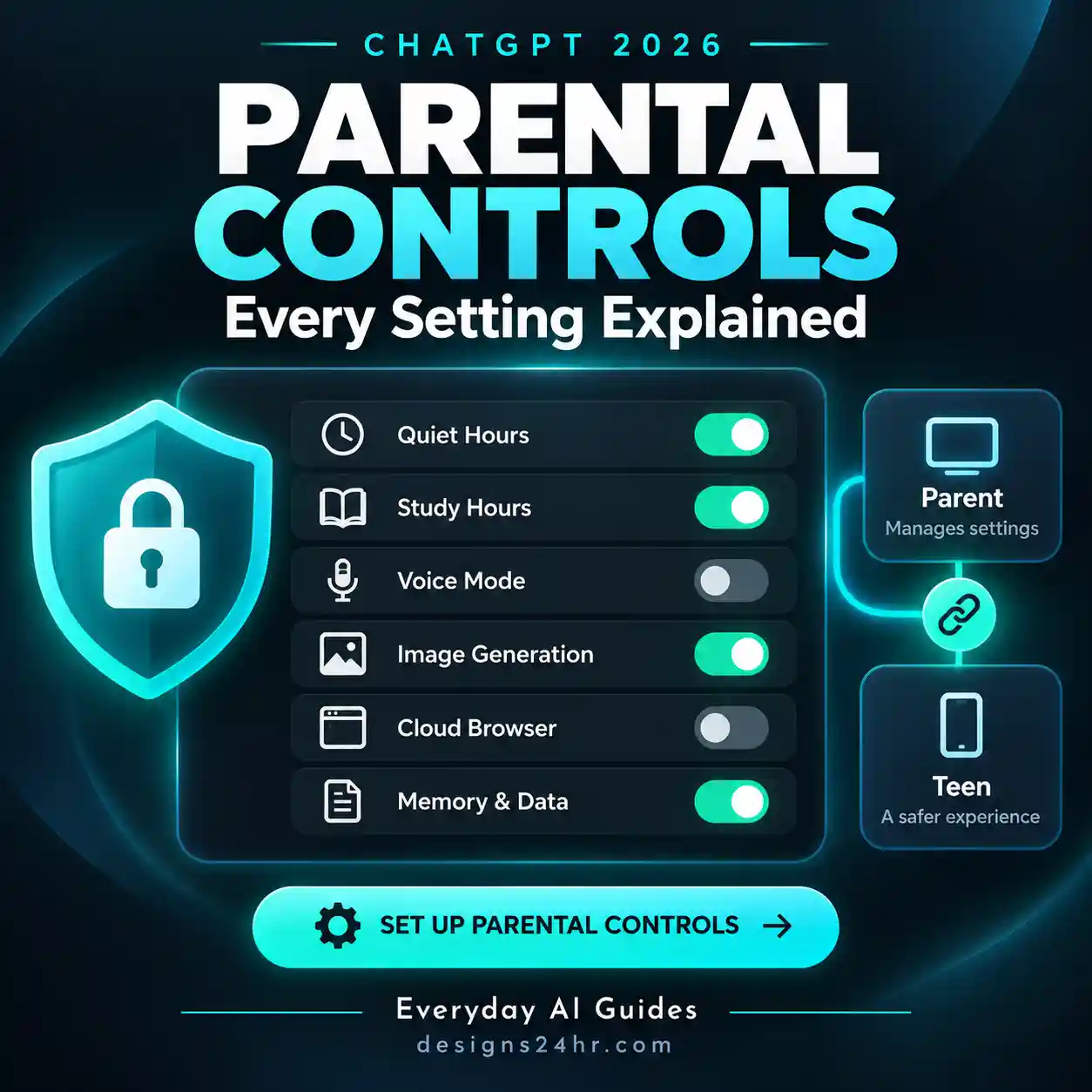
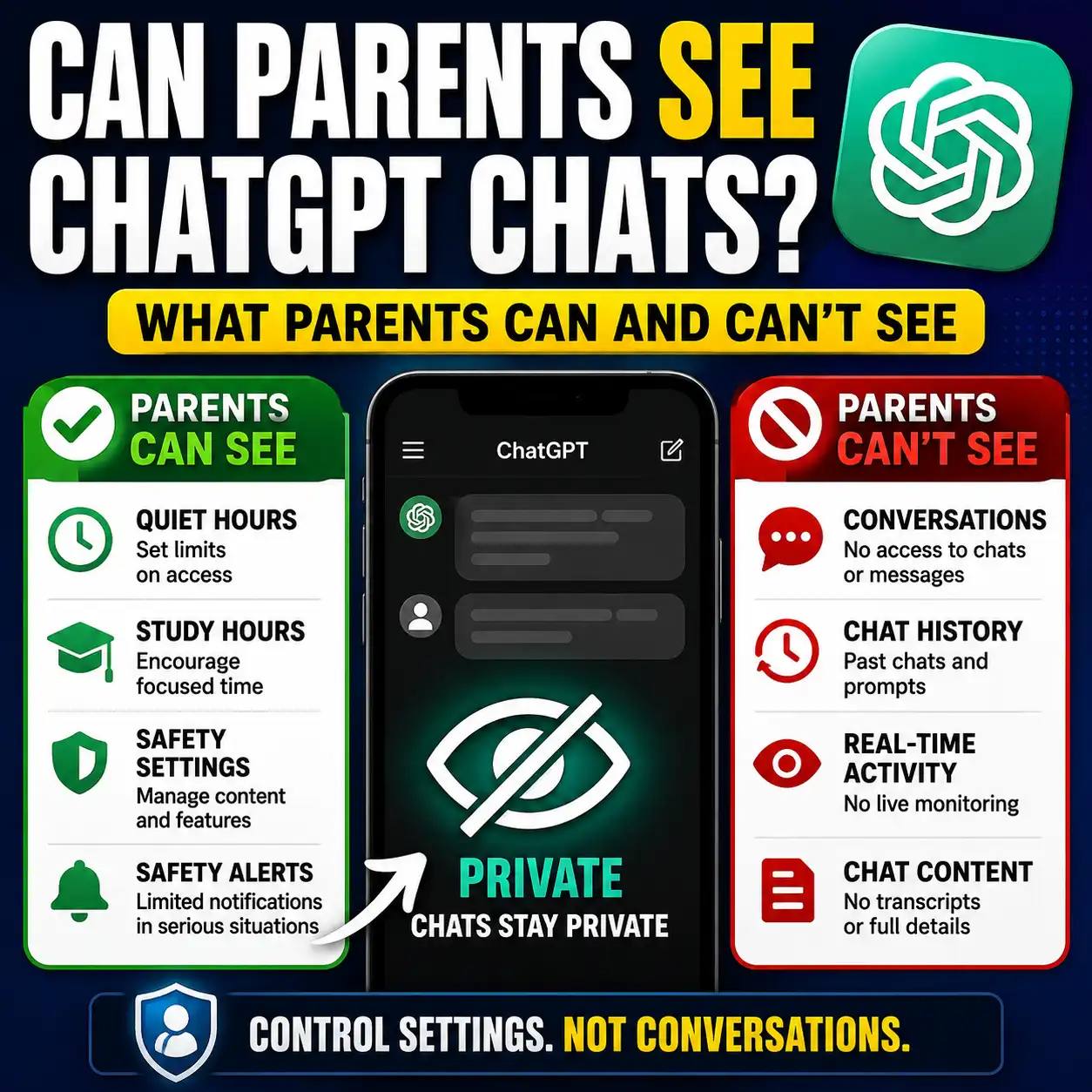
OpenAI’s parental controls help page describes linking a parent’s account to a teen’s account. Once linked, a parent can manage settings such as Reduce sensitive content (on by default), Voice Mode, image generation and Quiet hours, which sets times when the teen can’t use ChatGPT. Linking does not let a parent read the teen’s conversations; see can parents see ChatGPT chats for what is and isn’t visible.
Our rule of thumb: for children under 13, the parent holds the phone and reads the story aloud. ChatGPT is the writing helper; you are the storyteller and the filter. For broader chatbot safety at home, see the AI companion safety checklist.
Tips for reading a ChatGPT bedtime story aloud
- Read it once silently first. It’s quick, and it catches odd sentences, made-up facts or anything too intense.
- Let your child choose two ingredients. A character and a place is enough. They feel ownership without screen time.
- Edit as you read. Change a name, skip a line, slow the ending. Nobody else knows the original text.
- Keep a favorites file. Paste the best stories into a document or notes app so you can reread them on busy nights.
- Keep printed books in the mix. A ChatGPT bedtime story is a handy extra, not a replacement for the picture books and library books you share.
- Watch the screen glow. Lower your phone’s brightness or copy the story out before you dim the lights.
ChatGPT bedtime story FAQ
Can ChatGPT make a bedtime story for my child?
Yes. Ask for a ChatGPT bedtime story and include your child’s age, a length in words, a main character, a couple of interests and a calm ending. The prompts above do this for you.
Can my young child use ChatGPT to make stories by themselves?
Not on their own account if they’re under 13. OpenAI’s Terms set a minimum age of 13 (or the local minimum), and users under 18 need a parent’s or guardian’s permission. A parent running the chat and reading aloud is the simple, rule-friendly option.
Is it safe to use my child’s name in a ChatGPT bedtime story?
A first name or nickname with general interests is a low-detail way to personalize. Avoid last names, school names, locations and photos. A Temporary chat keeps the conversation out of your history and out of model improvement while it stays temporary.
How long should a bedtime story be?
There’s no official number. As a starting point, try 100 to 150 words for toddlers and 300 to 500 words for school-age kids, then adjust to your child. Treat these as practical suggestions, not data.
What are good bedtime story prompts for kids?
Good bedtime story prompts name the age, length, character and interests, and they ban scary twists. Prompts 1, 4 and 7 above are reliable starting points.
Keep going
- Setting up ChatGPT for a teen? Start with how to set up ChatGPT parental controls.
- Wondering what a parent can see? Read can parents see ChatGPT chats.
- Teaching kids about AI? Use the AI literacy for kids checklist.
- Want stories that don’t stick around? See how ChatGPT Temporary Chat works.
Sources
- OpenAI, Terms of Use (effective January 1, 2026): minimum age, parent permission under 18, output accuracy and ownership.
- OpenAI Help Center, Managing parental controls in ChatGPT: teen account linking, available settings, what parents can’t see.
- OpenAI Help Center, Temporary chat in ChatGPT: history, memory, model improvement and 30-day safety retention.
This guide is a documented process based on the official pages above and our own prompt writing. The word counts are suggestions, not test results.
ChatGPT and OpenAI are trademarks of OpenAI. Product names are trademarks of their respective owners; no affiliation or endorsement is implied.
This article was created with the help of AI, one of the many ways AI is making useful knowledge easier for everyone to create and access. It is provided for educational purposes only, to help readers understand and use AI tools better.
Get new AI guides every week
Short, practical how-tos and free tools from Designs24hr. No spam, unsubscribe anytime.