Choosing an AI major vs computer science is harder than comparing two degree names. A dedicated artificial intelligence program may offer earlier or deeper machine-learning coursework, while computer science typically provides a broader computing foundation. But the better choice depends heavily on the actual curriculum, not the label printed on the diploma.
That matters even more as universities introduce new undergraduate AI programs with different combinations of programming, algorithms, mathematics, machine learning, ethics, systems, projects and electives. Before deciding, you need to know what each program actually teaches, how much flexibility it gives you, and whether it builds the fundamentals needed for the direction you may want to pursue.
Quick answer: AI major or computer science?
For many students, computer science is the broader option. It can provide foundations in programming, algorithms, software and computing systems while leaving room to specialize in artificial intelligence later.
A strong AI major can be a good choice when you already want deeper AI and machine-learning study and the program still includes rigorous computer science and mathematics foundations.
The most useful rule is simple: compare curricula, not labels. A well-designed AI program can be stronger for your goals than a particular CS program, while a strong CS program with excellent AI electives may be a better option than a lightly structured degree carrying the AI name.
How this guide was built: Designs24hr compared current official undergraduate AI program requirements from Purdue University, UC San Diego and the University of Pennsylvania, then checked career-education context against the U.S. Bureau of Labor Statistics. The goal is not to rank universities. It is to give you a repeatable way to compare the real programs available to you. Sources were reviewed in September 2026.
AI Major vs Computer Science at a Glance
The comparison below describes common patterns, not universal rules. Universities design their programs differently, so always check the current degree requirements for the specific schools you are considering.
| Factor | AI Major | Computer Science |
|---|---|---|
| Primary focus | Artificial intelligence, machine learning and related applications | Broader study of computing, software, algorithms, systems and theory |
| AI coursework | Often built into the core and advanced requirements | May come through electives, concentrations or specialization tracks |
| Programming | Should be an important foundation in a strong program | Normally a major part of the computing foundation |
| Algorithms and data structures | Important components to look for | Typically central parts of the degree |
| Mathematics | Strong programs may emphasize calculus, linear algebra, probability and statistics | Requirements vary, with additional math often useful for AI specialization |
| Systems breadth | Varies considerably by program | Often broader across systems, software and computing topics |
| Specialization | Usually begins earlier or occupies more of the degree | Usually offers more room to explore several computing areas |
| Best fit | Students confident they want substantial AI/ML coursework | Students who want a broad computing base or are still exploring specialties |
What Is an Artificial Intelligence Major, and What Do You Study?
An artificial intelligence major is an undergraduate program that makes AI, machine learning or closely related computational topics a substantial part of the degree. The exact structure is not standardized: one university may offer a dedicated AI bachelor’s degree, another may place AI inside computer science as a concentration or track, and another may build an interdisciplinary program across computing, mathematics, data and related fields.
A serious artificial intelligence degree is not simply four years of learning how to use chatbots or current generative-AI products. Strong technical programs build foundations needed to understand, develop and evaluate computational systems.
Current 2026 undergraduate programs show how different those structures can be. Purdue University’s current AI requirements include technical AI coursework and a capstone pathway. UC San Diego’s B.S. in Artificial Intelligence describes core topics including programming, data structures, algorithms, artificial intelligence, machine learning and data ethics. The University of Pennsylvania’s Artificial Intelligence BSE includes programming, algorithms, calculus, linear algebra, probability, statistics, machine learning and specialized AI study.
Depending on the university, an AI major may therefore include:
- computer programming;
- data structures and algorithms;
- calculus and discrete mathematics;
- linear algebra;
- probability and statistics;
- artificial intelligence foundations;
- machine learning;
- optimization;
- natural language processing;
- computer vision;
- data and AI ethics;
- advanced AI electives;
- projects, capstones or research opportunities.
Why this matters: there is no single curriculum shared by every “AI degree.” When evaluating a school, use its current official catalog and department requirements rather than assuming the degree name tells you what you will study.
What Do You Study in Computer Science?
Computer science is a broader field. A CS program may include programming, algorithms, data structures, computer architecture, operating systems, databases, software engineering, networks, theory, security and other areas of computing. Students can then use electives, concentrations, research and projects to move deeper into AI or machine learning.
This broader structure can be valuable if you know you like computing but are not certain that artificial intelligence will remain your preferred specialty throughout college.
It also means that the phrase “computer science degree” does not tell you how much AI you will study. One university may offer extensive machine-learning, computer-vision and NLP electives, while another may offer fewer options. You still need to examine the course catalog.
AI Major vs Computer Science With an AI or ML Concentration
A third option can sit between a dedicated AI degree and a general computer science degree: computer science with an AI, machine-learning or intelligent-systems concentration. For some students, this structure offers a useful compromise because the degree keeps a broad CS core while reserving part of the curriculum for deeper AI study.
Do not assume a concentration is automatically broader or weaker than a dedicated AI major. Compare how many AI courses are actually required, which advanced electives are offered, how much mathematics is included, and whether the concentration still leaves room for systems, software, security, databases or other computing areas.
| Program structure | Typical advantage to investigate | Main question to ask |
|---|---|---|
| Dedicated AI major | More AI/ML coursework may be built into the required core. | Does it still provide strong programming, algorithms, math and computing foundations? |
| CS + AI/ML concentration | Can combine a broad CS foundation with a defined AI specialization. | Is the concentration deep enough to go beyond a few introductory electives? |
| General CS + AI electives | Can preserve the most flexibility across computing areas. | Are enough advanced AI/ML courses, faculty and project opportunities actually available? |
AI Major vs Computer Science: The Biggest Differences
1. Specialization
An AI major usually dedicates more of the degree to AI, machine learning and closely related subjects. This can give you more structured specialization earlier.
2. Breadth
Computer science usually covers a wider range of computing topics. That breadth may be useful if your interests later move toward software engineering, systems, security, databases or another computing field.
3. Mathematics
AI and machine learning can rely heavily on mathematics. When comparing programs, look carefully for calculus, linear algebra, probability and statistics rather than assuming every AI degree provides the same mathematical depth.
4. Computing foundations
A strong AI program should still provide meaningful programming, data-structures and algorithms foundations. If those areas look surprisingly thin, investigate why before choosing the program.
5. AI depth
Dedicated AI programs may provide more required AI classes and more room for topics such as machine learning, language processing, computer vision and optimization.
6. Flexibility
A broader CS program may make it easier to explore several computing directions before committing to one. The actual flexibility depends on the university’s requirements and elective structure.
7. Program maturity
Some undergraduate AI majors are relatively new. New does not mean weak, but it makes faculty depth, course availability, research, advising and program structure important things to investigate.
8. Your uncertainty
If you are still deciding between AI, software, cybersecurity, systems or other areas, the broader option may fit better. If your interest in AI is already strong, specialization may be more attractive.
Is an AI Major Worth It?
An artificial intelligence major can be worth considering, but the words “Artificial Intelligence” in a program name are not enough to establish its quality or fit.
An AI major may make sense if:
- you are genuinely interested in AI and machine learning rather than choosing it only because AI is currently popular;
- the program includes strong programming and algorithms foundations;
- the mathematics requirements are appropriate for the technical material;
- there are meaningful advanced AI electives;
- faculty are actively teaching or researching relevant areas;
- students can complete substantial projects, research or capstone work;
- you are comfortable specializing earlier in your undergraduate education.
Investigate more carefully if:
- the curriculum looks focused mainly on using current AI applications instead of understanding computing and AI fundamentals;
- data structures or algorithms appear weak or absent;
- the mathematics foundation looks unusually light;
- there are very few advanced AI electives;
- you cannot find clear information about projects, faculty or research;
- you are not yet certain that AI is the computing field you want to specialize in;
- the program’s marketing sounds much stronger than the published curriculum.
The Designs24hr 10-Factor AI Degree Curriculum Audit
Before getting excited about the name of an AI program, open its official curriculum and investigate these ten factors. This is an audit, not a point system: a missing item may be covered under another course name, offered as an elective or matter more or less depending on your goals.
- Programming: Are students building genuine programming skills?
- Data structures: Does the program cover ways of organizing and working with data computationally?
- Algorithms: Is algorithmic thinking a meaningful part of the degree?
- Calculus: Does the mathematics foundation support later technical coursework?
- Linear algebra: Is this core mathematical area represented?
- Probability and statistics: Does the curriculum prepare students to reason about uncertainty and data?
- Machine learning: Is ML studied beyond surface-level tool use?
- Advanced AI options: Are there substantive electives such as NLP, computer vision, optimization or related fields?
- Projects or research: Can students apply their knowledge through meaningful work?
- Academic and career opportunities: Are relevant faculty, internships, advising and other opportunities available?
How to use it: Mark each factor as clearly present, unclear or missing, then investigate the unclear and missing areas in the official catalog. Do not total the marks into a “quality score.” Program quality and fit cannot be reduced reliably to ten equally weighted points.
AI Major Red Flags to Check Before You Enroll
A degree can use fashionable language without necessarily providing the foundation you expected. These are investigation signals, not automatic reasons to reject a school.
Look more closely if you find:
- very little algorithms or data-structures coursework;
- a weak mathematical foundation for a highly technical AI curriculum;
- heavy emphasis on today’s AI products rather than durable concepts;
- few advanced AI electives;
- no clear capstone, project or research pathway;
- limited information about faculty expertise;
- unclear internship or experiential-learning opportunities;
- marketing that implies a degree guarantees a particular job;
- little flexibility to explore another computing area;
- a degree title that sounds much more advanced than its published requirements.
Which Major Fits What You Want to Build?
Instead of beginning with the degree name, start with the type of work that currently interests you. Then investigate which program provides the strongest preparation while preserving enough flexibility if your interests change.
| If you are interested in… | Programs to investigate | What to look for |
|---|---|---|
| Machine learning | AI or CS with strong ML options | Algorithms, linear algebra, probability, statistics, ML and substantial projects |
| General software development | Computer science | Programming, algorithms, software engineering, systems, databases and project work |
| AI research | AI or CS with rigorous math and research access | Advanced mathematics, algorithms, ML theory, faculty research and graduate-study preparation |
| Data-intensive work | AI, CS, data science, statistics or related programs | Statistics, databases, data systems, programming and machine learning |
| Hardware plus intelligent systems | Computer engineering, CS or relevant AI programs | Hardware, embedded systems, programming, architecture and suitable AI electives |
| Broad computing options | Computer science | A wide core plus enough electives to explore several specialties |
Can You Work in AI With a Computer Science Degree?
Yes. A computer science degree can be one route into AI-related work. Students can build relevant preparation through machine-learning electives, mathematics, research, personal or academic projects, internships and later graduate study where appropriate.
However, “working in AI” covers many different kinds of jobs. The educational requirements for a software-development role are not necessarily the same as those for a research-focused position.
For example, the U.S. Bureau of Labor Statistics says software developers typically need a bachelor’s degree in computer and information technology or a related field. BLS separately says computer and information research scientists typically need at least a master’s degree, although requirements vary and some positions differ.
That distinction is important: neither an AI degree nor a CS degree automatically qualifies someone for every AI-related occupation. Look at the education, skills and experience required for the actual roles that interest you.
What if You Want to Become an AI Researcher?
If your goal is research rather than primarily building applications, investigate the academic path beyond the bachelor’s degree as well.
BLS currently reports that computer and information research scientists typically need a master’s degree in computer science or a related field, and some employers prefer a Ph.D. That does not mean every person doing AI-related research follows exactly the same path, but it is a useful reminder that an undergraduate AI major is not automatically a direct substitute for graduate preparation.
For a research-oriented undergraduate path, pay particular attention to:
- mathematics depth;
- algorithms and theory;
- machine-learning foundations;
- research-active faculty;
- undergraduate research access;
- advanced electives;
- graduate-level course opportunities where appropriate;
- substantial technical projects.
Computer Science Is Not “Outdated” Because of AI
AI’s growth does not make computing fundamentals irrelevant. Modern AI systems still depend on programming, algorithms, data infrastructure, software systems, security, networks, hardware and other areas of computing.
The current BLS outlook for software developers identifies continued software development for AI and other automation applications as one factor contributing to demand. That does not guarantee future outcomes for an individual student, but it does contradict the simplistic idea that learning computer science has become pointless because AI can generate code.
A more useful question is:
How to Compare Two Real College Programs
This is the step that matters most. Do not compare “AI” with “computer science” in the abstract and then pick a school. Compare the actual programs you can realistically attend.
The Side-by-Side Program Audit
Open the official degree pages for School A and School B. Compare each of these before making your shortlist:
Then ask yourself one final question: If both degrees had generic names, which curriculum would I prefer?
That removes a surprising amount of marketing bias from the decision.
So, Which Should You Choose?
Use your interests and the strength of the real programs available to you.
What Can You Do Before College to Test Your Interest?
You do not need to commit to a four-year degree just to discover whether you enjoy the underlying work.
Try introductory programming, mathematics, data analysis or beginner machine-learning material. Pay attention to whether you enjoy solving technical problems—not only using polished AI applications.
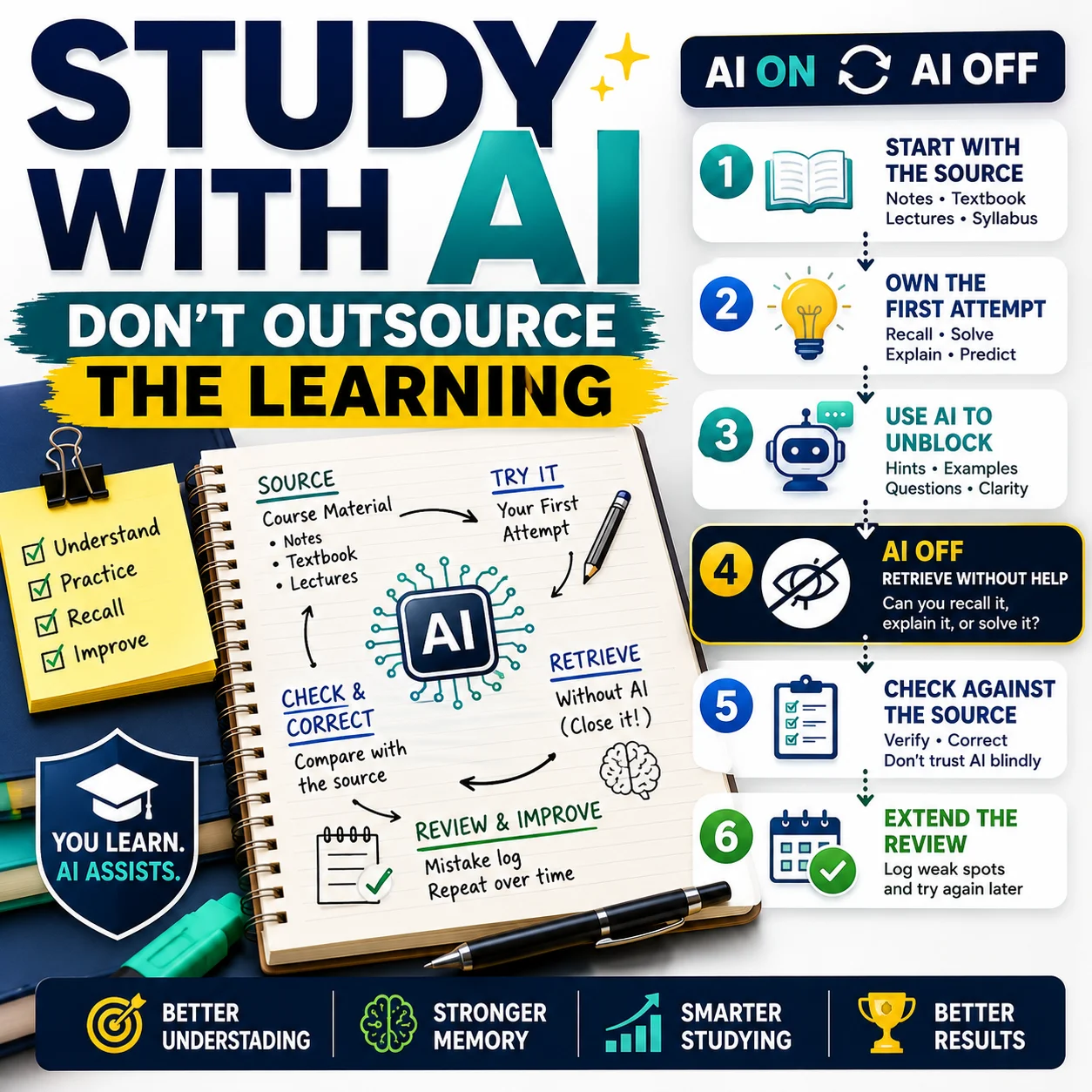
If you are already a student using AI for school, our guide to studying with AI without letting it do the learning shows how to use AI for explanations and practice while keeping the actual reasoning yours.
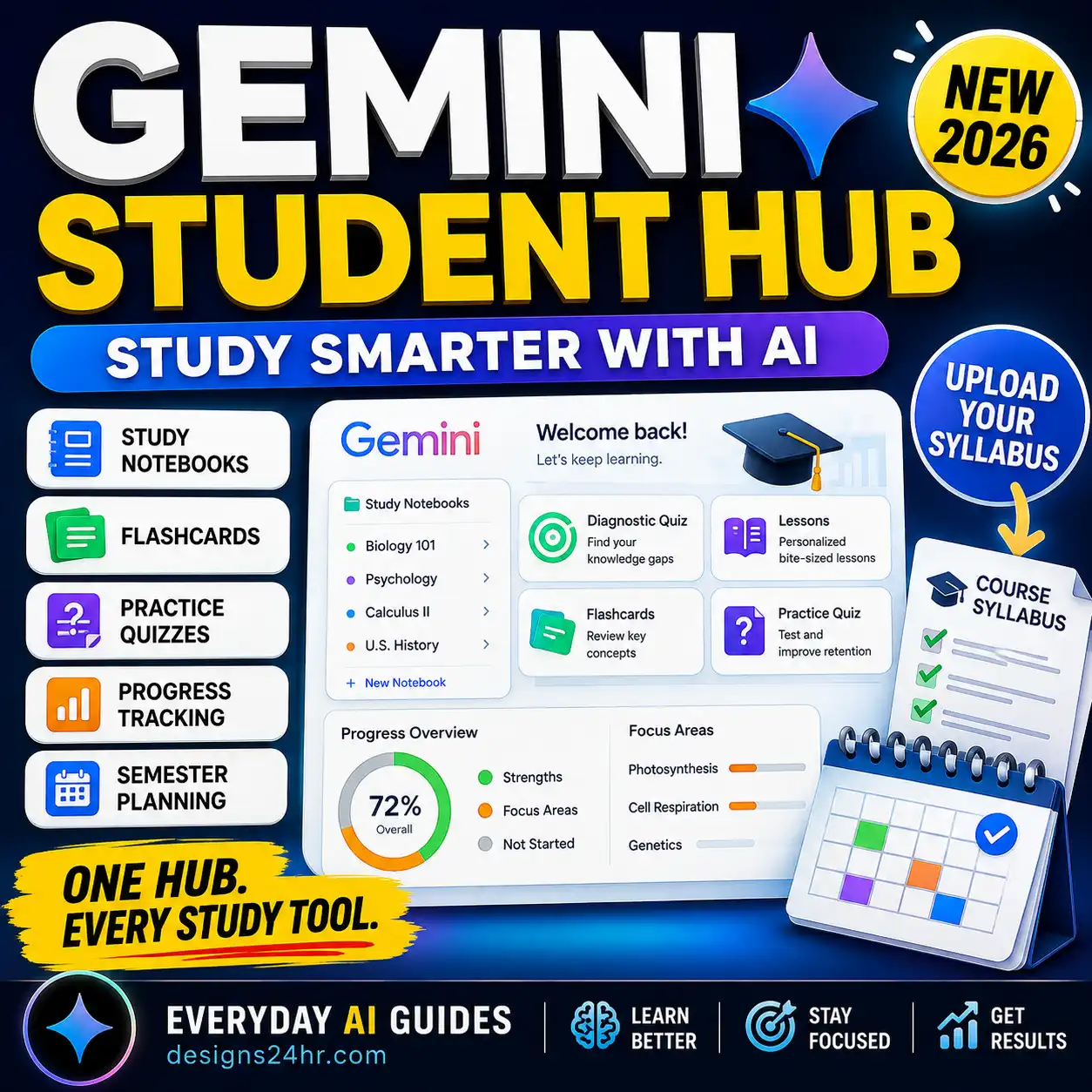
You can also explore the Gemini Student Hub study workflow if you use Google’s learning tools, or review the current Google AI Pro student offer guide if you are an eligible U.S. college student. Offers and eligibility can change, so always verify the latest terms before signing up.
AI Major vs Computer Science FAQs
Is an AI major better than computer science?
Not universally. An AI major is usually more specialized, while computer science is generally broader. The better choice depends on the specific curricula, your interests, program quality, cost, flexibility and the type of work you may want to pursue.
Is an artificial intelligence degree worth it?
It can be worth considering when the program combines strong programming, algorithms and mathematics foundations with substantial AI coursework, meaningful projects and relevant academic opportunities. Do not evaluate a program from the degree title alone.
Can you work in AI with a computer science degree?
Yes. Computer science can provide foundations relevant to AI, and students can add machine-learning courses, mathematics, research and projects. Requirements vary significantly by occupation, and some research-focused roles may require graduate education.
What is the best major for artificial intelligence?
There is no universally best major for every AI path. Artificial intelligence, computer science, data science, mathematics, statistics, computer engineering and related programs can provide different foundations. Compare the curriculum with the work you are interested in doing.
Is computer science with an AI concentration better than an AI major?
Not automatically. A CS degree with a strong AI or machine-learning concentration can combine broad computing foundations with specialization, while a rigorous dedicated AI major may provide greater required AI depth. Compare the actual required courses, mathematics, advanced electives, faculty, projects and flexibility rather than choosing from the label.
Is AI harder than computer science?
Neither degree is objectively harder in every university. Difficulty depends on the curriculum, mathematics requirements, course selection, institution and your own strengths. Compare actual degree plans rather than relying on the program name.
Does an AI major require math?
Strong technical AI programs commonly include significant mathematics. For example, current university AI curricula can include calculus, linear algebra, probability and statistics. Requirements vary, so check each university’s official catalog.
Is computer science becoming outdated because of AI?
No. AI systems depend on many areas of computing, including programming, algorithms, software infrastructure, systems and data. AI is changing how some computing work is done, but that is different from making computer science fundamentals obsolete.
Should I major in AI if I want to become a machine learning engineer?
An AI degree can be one path, but a strong computer science program with suitable mathematics and machine-learning coursework can also provide relevant preparation. Compare the requirements of actual roles you are interested in with the courses and experiences offered by each program.
Official Sources Used for This Guide
Methodology: Degree requirements can change. Designs24hr reviewed the official program and catalog pages below for curriculum examples and used U.S. Bureau of Labor Statistics occupation pages for general education and career context. Sources were checked in September 2026. This guide does not rank the universities or claim that one curriculum is universally better.
- Purdue University — Artificial Intelligence Degree Requirements, Fall 2026 to Present
- UC San Diego — B.S. Artificial Intelligence
- University of Pennsylvania — Artificial Intelligence BSE
- U.S. Bureau of Labor Statistics — Software Developers, Quality Assurance Analysts, and Testers
- U.S. Bureau of Labor Statistics — Computer and Information Research Scientists
The Bottom Line
Do not choose the degree name. Choose the stronger curriculum for the foundation, specialization and flexibility you actually want.
An AI major can be an excellent option when it combines serious computing and mathematics foundations with meaningful AI depth. Computer science can be the stronger choice when you want broader computing flexibility, and a CS degree with a substantial AI or ML concentration may offer a useful middle path. The strength of the specific program matters more than the label.
Your final comparison should happen at the program level: courses, faculty, research, projects, internships, cost, flexibility and personal fit.
Already thinking about internships or your first job?
Your major is only one part of career preparation. When you are ready to practice communicating your real projects and experience, try the free AI Interview Coach and keep every example truthful to what you have actually done.
Get new AI guides every week
Short, practical how-tos and free tools from Designs24hr. No spam, unsubscribe anytime.